Creamy Rice with Peas and Asparagus

pea asparagus rice

There is a beautiful quarterly cookbook/magazine called Canal House cooking.  It is founded by two friends who meet together every day to talk about what they had for dinner the night before, and then they get cooking.  They decided to start writing down their recipes and what resulted was this beautiful magazine book.  I like to try recipes out that are in season, and so I am currently going through their Spring issue.  And even though there aren’t a  lot of fresh peas in our produce bins, I know that they are currently in season somewhere out there in lands where it rains, so I felt this was still an appropriate recipe for an overcast May day.  Asparagus is also in season, so I added some chopped up that I had roasted a few nights before and it was a really excellent addition.  Canal House calls this dish Risi E Bisi  (rice and peas) and it’s just that simple.

This is an excellent dish for little ones.  The comfort of soft rice and cheese and the addition of greens and a dab of butter makes this dish all-inclusive. For smaller, toothless ones, this would be so simple to pulse a few times with an immersion blender!  Olive still doesn’t like asparagus, but I think I’ve only given it to her 5 times.  I’m going to try at least 15 more times before I determine that she does not, in fact, love asparagus.  I challenge any  mom out there to do the same!  Case in point: I had nearly determined that Olive didn’t like peas until I hadn’t given them to her for a week or so, and then tried again and she gobbled them up.  I realized that familiarity equals good for a child.  So if you make a wide variety of vegetables simply familiar to a child, the enthusiasm will soon follow.  I believe this with all my heart, even on days where Olive spits out anything green.  One day she won’t, and I’ll be glad I didn’t let her under-developed, under-exposed palate determine her food preferences!

green rice

Creamy Rice with Peas and Asparagus
serves 6

2 tbs extra virgin olive oil
4 tbs butter
1 onion, finely chopped
2 cups fresh peas (you could also use frozen, as I did and it turned out great)
salt
6 cups hot chicken or vegetable stock
1 1/2 cups arborio rice, or other short grain rice.  I didn’t have any on hand, so I used plain long grain white and it was just fine.
1/2 cup freshly grated parmigiano-reggiano
pepper to taste
1 bunch asparagus, roasted at 400 with olive oil, salt and pepper until tender

Heat the olive oil and 2 tbs of the butter together in a heavy medium pot over medium heat.  Add the onions and cook until soft and golden, 5-10 minutes.  Add the peas and season with salt.  Cook for a minute or two, then add 1 cup of the hot stock.

Cover the pot, reduce the heat to medium-low, and simmer the peas until they begin to soften, about 5 minutes.

Stir in the rice and 4 cups of the remaining hot stock. Cover the pot and adjust the heat to maintain a gentle boil.  Cook the rice, stirring occasionally, until tender, about 20 minutes.

Remove the pot from the heat and moisten the rice and peas (if needed and too thick) with the remaining cup of stock (I didn’t do this step – my rice didn’t absorb as much as arborio would have) Stir in the remaining 2 tbs of butter and half of the cheese.  Fold in the chopped, roasted asparagus if you want.  Season with salt and pepper and serve sprinkled with remaining cheese.

Thai Basil Whatever

thai basil


I wanted to share with you a recipe I’ve been making for years.  Matt and I cooked a lot of Thai food in the first few years we were married.   Matt had a version of this dish while living in Nashville at a place that served Chinese food, but had Thai posters all over their walls.  So Matt asked one day if they would make him some Thai food and the guy excitedly made a chopped chicken dish with Thai basil and hot Thai chilies.  Matt was hooked.  We love the flavors of fish sauce, soy sauce, the heat of peppers and the sweetness of basil that this dish brings.  It’s a wonderful mix of sweet/sour/spicy.  Over the years, we’ve lost the original recipe we first referenced and so this is legitimately a Palmer original.

Again – don’t be afraid of fish sauce.  It’s completely essential to the flavor balance of this dish.  If you can’t find Thai basil, regular Italian basil works just fine.  I’ve used ground pork, chicken and turkey, as well as hand chopped chicken thighs (so good), but my go-to is ground turkey.  Don’t leave off the fried egg!

Thai Basil Turkey 
serves 4

1lb ground chicken, turkey or pork
3 tbs peanut oil or canola oil
1 medium white onion, chopped fine
6 cloves garlic, chopped
4 or 5 seeded jalapenos, diced (or Thai chilies, or whatever kind of pepper/heat level you want)
1 tbs fish sauce
1 tbs soy sauce
1/2 cup chopped fresh basil leaves

This recipe goes quicker if you use a large wok over really high heat.  If you don’t have a wok, use the largest stainless steal skillet, or cast iron skillet you have.  Heat the oil over medium high heat till it shimmers.  Add in the onion and stir a few times till they soften.  Working quickly, stir in the garlic and cook until fragrant, about 30 seconds.  Add in your ground meat and jalapenos and stir until meat is cooked through.  If you want more heat, stir in your chilies closer to the end of cooking.  When the meat has cooked through, toss in the fish and soy sauce and stir to coat.  Remove the pan from heat, stir in the chopped basil and cover to keep warm.  In a non-stick skillet, fry a couple eggs in peanut oil, and a splash of soy sauce and serve on top.

I typically serve this over about a half cup of rice.  I’m not going to tell you how to cook rice.


Pasta Carbonara – tried and true recipes

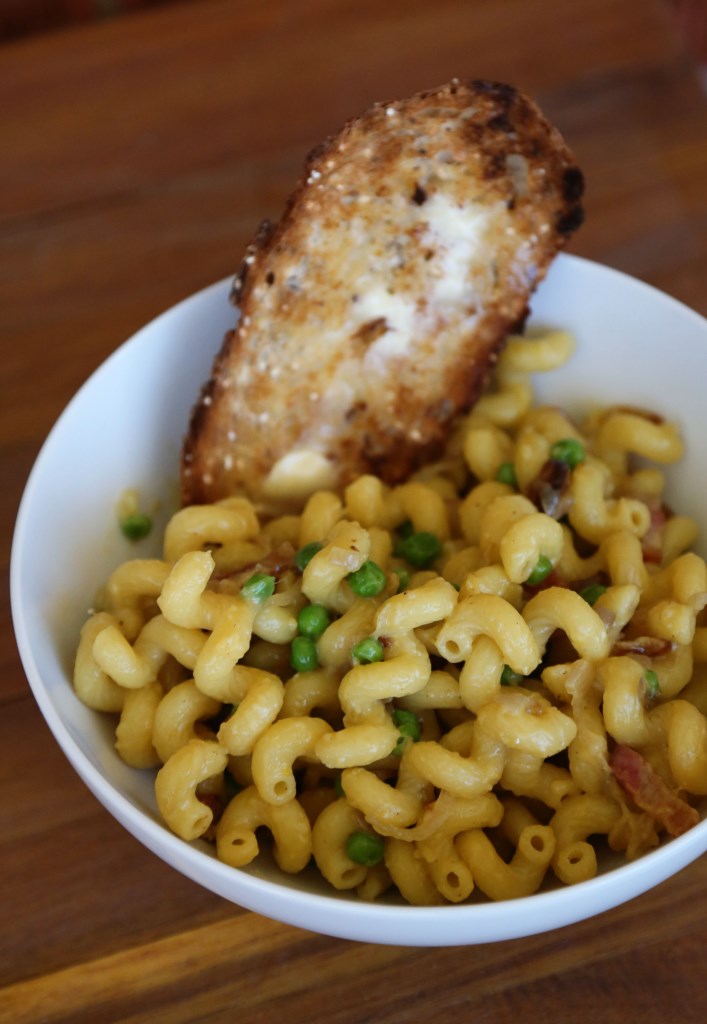
pasta carbonara bowl

I’m going back to some basics this week.  I’ve exhausted myself on trying something new nearly every single day for two months.  Time for some repeats!  I have made some form of pasta carbonara on a regular basis since Matt and I were first married, 8 years ago.  Carbonara is one of those dishes that you can nearly always make, even when you don’t think you have anything in the fridge for dinner.  (Hello, Monday dilemma)  Nearly everyone has some form of pasta on hand. Carbonara is traditionally made with spaghetti, but it can really be just fine with any kind of dried pasta you have on hand.  Also – most people have bacon either in the fridge or freezer.  The sauce for this dish comes from cheese and egg yolks – that’s it!  And if you’re wanting something extra tossed in, try frozen peas or corn or lima beans – any kind of random bag of frozen veg you have in the freezer that has been labeled “too little for a side dish, too much to throw away”

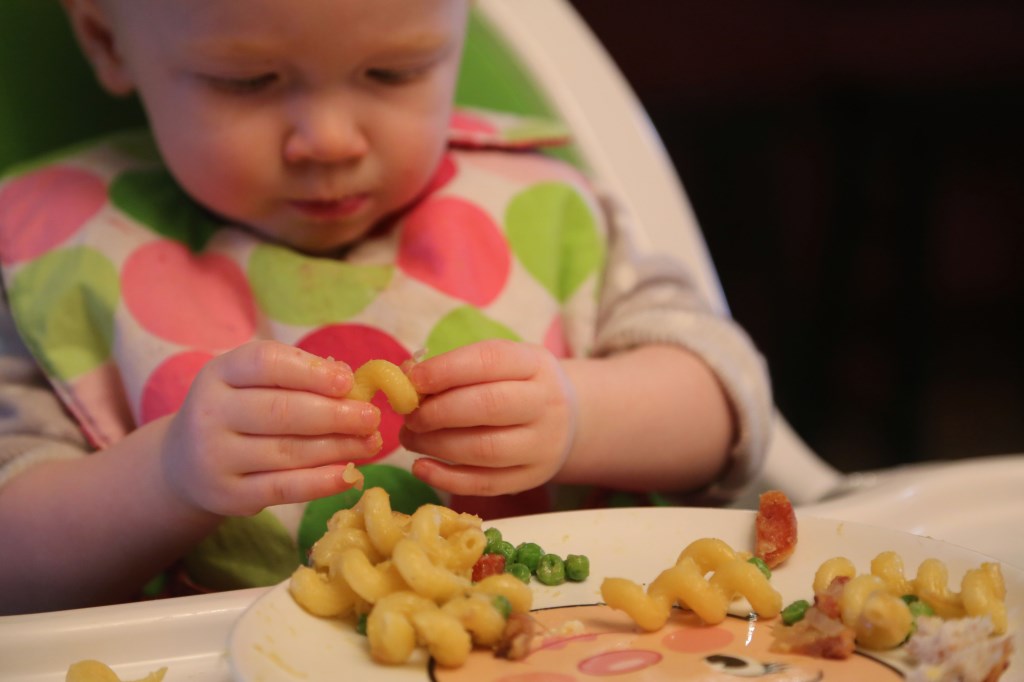
I love the comfort of this dish – I love the simplicity and I love that in about 25 minutes, I can have a dish on the table that makes everyone feel good.  The little darlin’ loved it, too.

pasta carbonara for lunch

carbonara

pasta carbonara

Good for little fingers is any kind of smaller pasta such as rigatoni, fusilli, macaroni, or these cute little corkscrew shapes (which I think are just un-trimmed macaroni)  really – whatever you think your toddler can grab or stab with a fork – go for it!

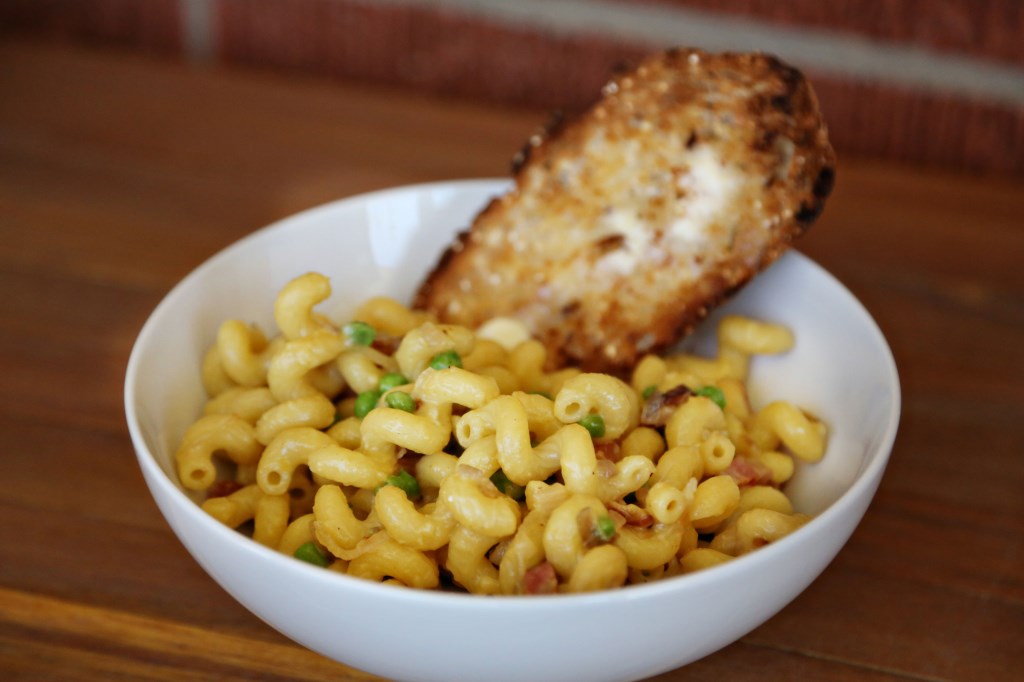
carbonara bowl

Pasta Carbonara
serves 2.5 (two big people and one little person) or 4 as a side dish

8 ounces dried pasta, cooked al dente (maybe cook a little longer for the baby if they don’t have more than 8 teeth, like mine)
4 strips of bacon, cut into 1 inch pieces
1 small onion, diced small
2 cloves of garlic, minced
1/2 cup frozen peas (or other vegetable of your choice)
1/2 cup grated parmesan cheese
2 egg yolks

1. Salt your pasta water.  I usually put about 1/4 cup of salt into a large pot of water (at least a half gallon of water.)  EEEEEEEK, SALT!  Here’s the thing: it flavors your pasta.  You don’t have to salt the dish upon completion because you salted along the way.  Just enough salt gets absorbed into the pasta and it’s perfect.  The noodles could be eaten on their own.  Try it next time.  And if you’re still worried, just look at how much sodium is in the powdered cheese on your blue box mac and cheese.

2. Bring the water to a rolling boil and cook the pasta till al dente, or a little over for the little mouths that will be eating.  Reserve a cup of pasta water and then drain your pasta, rinse and set aside.

3. Cook the bacon strips in a large skillet over medium heat until crispy.  Reserve on a paper towel and drain all but a tablespoon of the oil from the pan.  Toss in your onion and garlic and cook, stirring, until translucent.  Add in your frozen vegetables and pasta and a splash of the pasta water and stir until combined.

4. Remove the pan from the burner and while stirring constantly, add the egg yolks and cheese.  Stir stir stir stir as to not get scrambled eggs.  The heat from the pasta will cook your yolks and they will combine with the cheese to make a sauce.  If the pasta looks a bit too dry, add more of your reserved water and stir to combine.  Pasta water is starchy and salty and PERFECT for making a pasta sauce.

5. Fold in the bacon, garnish with more cheese, if desired, and serve with a crusty piece of buttered bread.

6. And a glass of Malbec for the big people.

Enjoy!

Homemade Goat Cheese

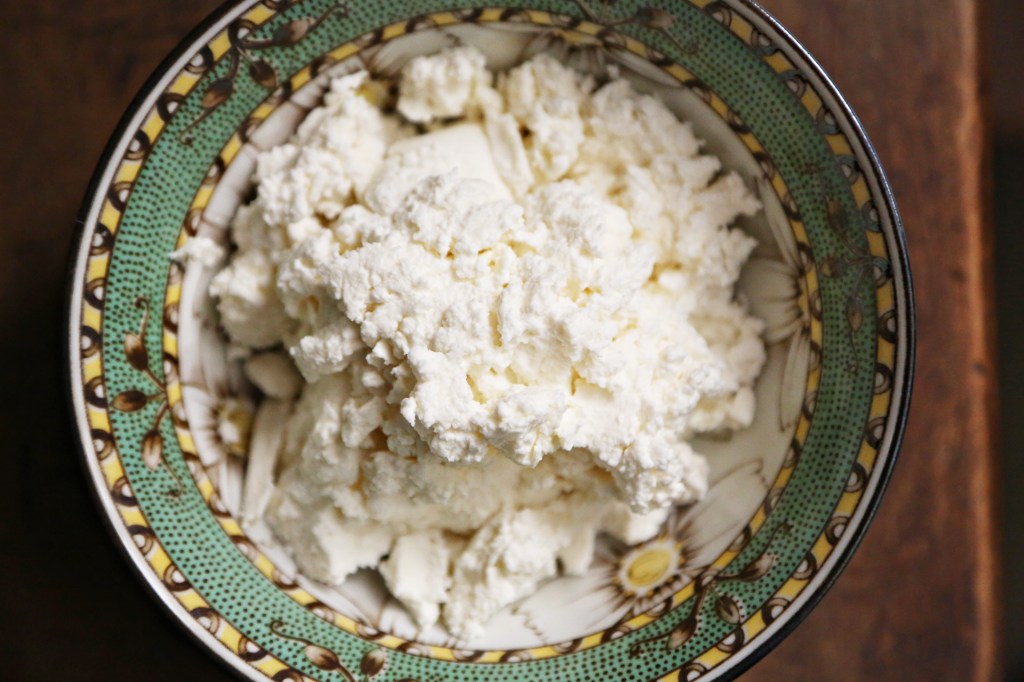
pure goat cheese

Good Monday Morning to you all!  I’ve been meaning to blog about homemade goat cheese for several weeks, now.  I stumbled upon this process because I’d bought a quart of goat’s milk when Olive was starting to wean and I read or heard or saw somewhere that goat’s milk digests easier than cow’s milk, so I figured I’d give it a shot.  I naturally tasted it before I gave it to her.  It tasted like liquid goat cheese.  I wouldn’t personally want to drink that, but I let her try it in the name of not pushing my personal tastes onto my child.  She wouldn’t take more than one sip.  Actually cried (this was around 9 months) so I bought a quart of whole cow’s milk instead and we haven’t looked back.  So I turned the goat’s milk into a nice, creamy 4 ounce log of goat cheese with garlic and herbs.  It was delicious.

I guess I’ll take this time to tell you that I don’t believe in eating something just because it has health benefits.  Eating grass straight from the yard is probably beneficial in some way, but that doesn’t mean I’m going to do it.  I believe things should have flavor, seasoning, and should taste wonderful in addition to however many antioxidants they might have.  So this, I suppose, ties in to the way I have always cooked for Olive.  I haven’t ever given her something without seasoning.  From 6 months, whatever she’s eaten has been seasoned with something (yes, less salt than I’d prefer, don’t worry.) And now that she’s eating from the table, it’s game ON.  Welcome to the wonderful world of food, Ollie.  We have chocolate!

Making goat cheese is easier than making bread, but the two go together quite nicely.  I don’t personally think that it’s easier or cheaper than buying goat cheese at the store.  I think a quart of goat’s milk is comparable to a cheap log of goat cheese.  However, it’s fun to do stuff from scratch, it’s creamier, tastier and gives you a sense of self satisfaction that you did something the old way.  Isn’t that reason enough to at least give it a try?


DIY Goat Cheese – adapted from Serious Eats
makes one, 4 oz log of goat cheese

1 quart of full fat goat’s milk (I bought this brand)
1/4 cup freshly squeezed lemon juice (from one large lemon, maybe two)
1/2 clove freshly grated garlic
a few pinches of salt
Herbs – whatever sounds good to you (rosemary, chives, herbs de Provence, non herbs like honey, chopped dried fruits, etc.  Possibilities are endless.  If you use something sweet, omit the garlic)

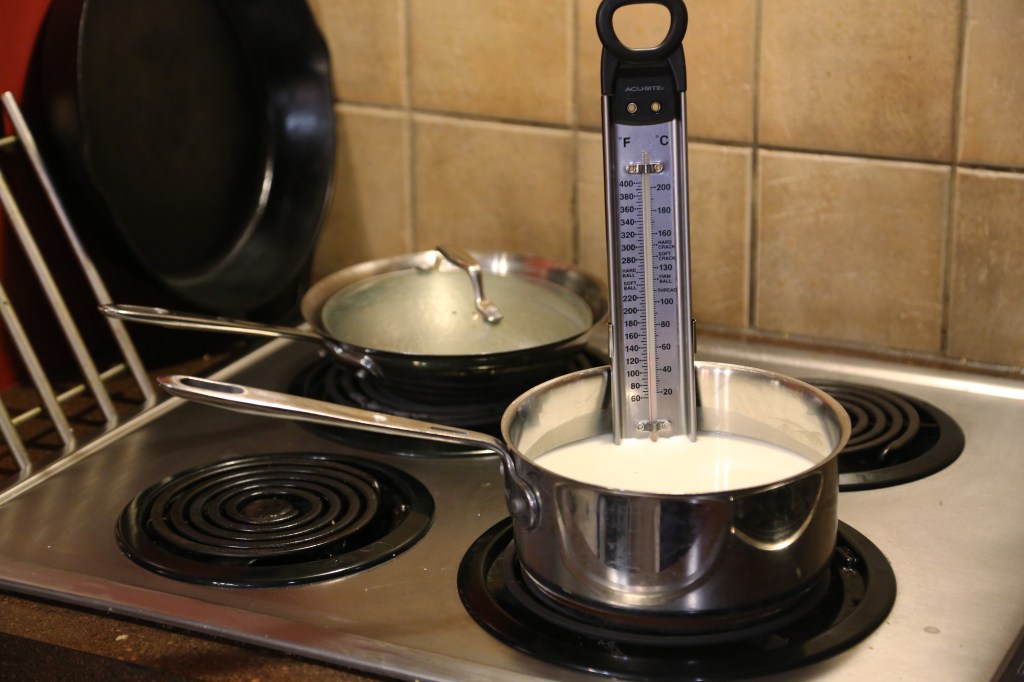
Fill a medium saucepan with goat’s milk.  Heat gradually until it reaches 180F.  Watch closely.  It shouldn’t take more than 15 minutes.  A candy thermometer works nice in this situation, but I used a probe meat thermometer the second time because it was more accurate (pictured here was my first attempt.)
cooking goat milk

Once it hits the magical temperature, remove from heat and stir in lemon juice. Let stand until milk starts to curdle, about 20 seconds. Don’t expect curdles, like cottage cheese curdles. Slight clumping will occur, but nothing too drastic. You can add a few extra droplets if nothing is actually happening.

Line a colander with a thin, flour sack kitchen towel.  Or lots and lots of layers of cheese cloth that you probably don’t have on hand.  Most of you have a thin kitchen towel that you can almost see through. As long as there aren’t holes, use it.  It’s efficient, it works great and just remember to wash it quickly and don’t throw it in the used-towel bin for a week all wadded up in a sweaty goat cheese smelling ball.  Like I did.

Set your lined colander over a deep bowl and ladle in the milk.  It will seem like it’s all seeping through, but don’t fret. Tie up the ends of the towel and suspend over the bowl and let it drain for about 2 hours.
straining goats milk

Transfer the cheese to a bowl and mix in seasonings to taste.  The first time I did it, I added the grated garlic, salt and about a teaspoon of herbs de Provence.  The second time, I roasted my garlic and added in olive oil.  SO GOOD. This time, I left out the garlic and stirred in some raw honey and a little salt and used it in a salad recipe from the Bonne Femme cookbook.  Amazing results.  Have fun with it!

After you mix in your flavors, if you want to be able to cut it or have some sort of shape, wrap it up in plastic wrap and leave in the fridge for a couple hours to let it firm up.  (see below) then you can cut it for bread or whatever you like.

goat cheese with baguette and raw honey


With just bread and extra honey it’s basically a dessert!

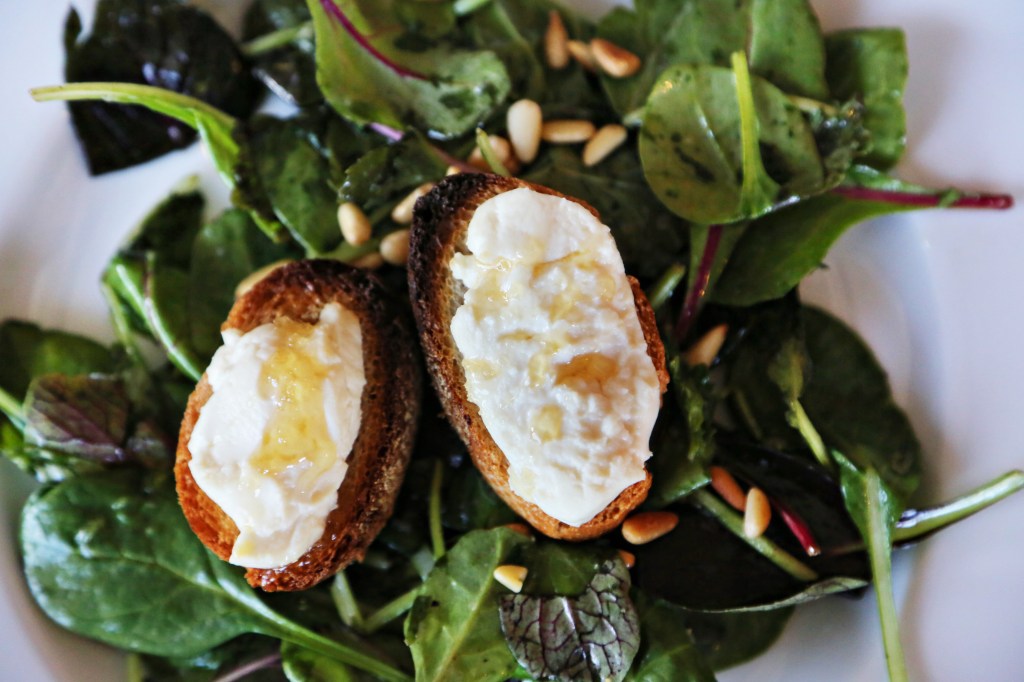
goat cheese honey salad


On top of baguette slices, broiled and then drizzled with extra honey.  Set on top of a mixed greens salad with toasted pine nuts and a sherry vinaigrette.  An excellent lunch!

Corned Beef – this is your Monday post

open faced corned beef sandwich

I once saw a segment on the Martha Stewart show where she had a guest on and they were making pastrami sandwiches.  In her typical, incredulous, Martha-tone, she said, “Doesn’t everyone corn their own beef?!”  I balked.  I would have asked, “Does anyone make their own corned beef?!”  Making my own corned beef seemed not only like a giant waste of time, but I don’t even crave the stuff, so why would I want to let a gigantic stock pot filled with a brisket sit in my fridge for a week when I could go buy a nice, pre-packaged Hormel version for $4?

Because I’m married to Matt Palmer.  He is extraordinary.  He always sees the potential in a long process.  He has endless patience.  He can set out with the process in mind, not the finished product.  He enjoys learning how to do something from scratch, whether it be something widely appealing like home cured bacon, or as unappealing and death-smelling as pickled diakon, which sat on top of my computer for a week, fermenting (but hey, it made an interesting dip!)  The point, for him, is always the learning process.  I have learned so much in the last 9 years of knowing him and 8 years living with him.  He’s never once lost his patience and thrown something against the sink to watch it explode because it didn’t work out right (ahem), and even spent one Sunday afternoon making homemade mayonnaise 5 times in a row for 2 hours because the emulsion kept breaking (I remember crying that day.)  Needless to say, he’s greatly influenced where I am now and how cooking has become therapeutic for me.  He is the reason I keep trying to do things better, for better’s sake.

So when he got me involved in his latest corned beef endeavor, I was less reluctant.  He got it in the brine, and I finished it on the stove a week later when it was ready.  It makes a TON, so I will be slicing it and freezing it really soon.  But the other day, I sliced some thin strips, heated them up in a skillet (unnecessary, because it’s cooked, but appealing because it sizzles) and made a corned beef sandwich on rye with store-bought sauerkraut that was fermented in someone ELSE’S place of business instead of my garage, thankyouverymuch.

The results were good.  I’ve taken the corned beef recipe directly from Michael Ruhlman’s blog, because that’s who we look to when it comes to charcuterie recipes and we didn’t deviate from the recipe a bit.  For the sandwich, I just toasted some rye bread, spread mayo and dijon mustard on each side, topped it with sliced cornichons and sauerkraut and melted some swiss cheese on top of the beef.

corned beef sandwich

Home-Cured Corned Beef

1-1/2 cups kosher salt*
½ cup sugar
4 teaspoons pink salt (sodium nitrite), optional
3 cloves garlic, minced
4 tablespoons pickling spice
1 5-pound beef brisket
1 carrot, peeled and roughly chopped
1 medium onion, peeled and cut in two
1 celery stalk, roughly chopped.

In pot large enough to hold brisket, combine 1 gallon of water with kosher salt, sugar, sodium nitrite (if using), garlic and 2 tablespoons pickling spice. Bring to a simmer, stirring until salt and sugar are dissolved. Remove from heat and let cool to room temperature, then refrigerate until chilled.

Place brisket in brine, weighted with a plate to keep it submerged; cover. Refrigerate for 5 days.

Remove brisket from brine and rinse thoroughly. Place in a pot just large enough to hold it. Cover with water and add remaining pickling spice, carrot, onion and celery. Bring to a boil over high heat, reduce heat to low and cover. Simmer gently until brisket is fork-tender, about 3 hours, adding water if needed to cover brisket.

Keep warm until ready to serve. Meat can be refrigerated for several days in cooking liquid. Reheat in the liquid or serve chilled. Slice thinly and serve on a sandwich or with additional vegetables simmered until tender in the cooking liquid.

*A note about the saltSalt level not hugely critical here because it’s basically boiled and excess salt moves into cooking liquid.  You can weigh out 12 ounces here if you feel better using a scale (approximately a 10% brine).  Or you can simply make a 5% brine of however much water you need to cover (6.4 ounces per gallon).  When you cook it, season the cooking liquid to the level you want your meat seasoned.  Another option is wrapping the brisket in foil and cooking it in a 225 degree oven till tender, but only do this if you’ve used the 5% brine.

Yield: 8 to 10 servings.

Pickling Spice

2 tablespoons black peppercorns
2 tablespoons mustard seeds
2 tablespoons coriander seeds
2 tablespoons hot red pepper flakes
2 tablespoons allspice berries
1 tablespoon ground mace
2 small cinnamon sticks, crushed or broken into pieces
2 to 4 bay leaves, crumbled
2 tablespoons whole cloves
1 tablespoon ground ginger.

Combine peppercorns, mustard seeds and coriander seeds in a small dry pan. Place over medium heat and stir until fragrant, being careful not to burn them; keep lid handy in case seeds pop. Crack peppercorns and seeds in mortar and pestle or with the side of a knife on cutting board.

Combine with other spices, mix. Store in tightly sealed plastic or glass container.

Chicken Saute with Sweet Potatoes and Rosemary

sweetchick3


march2013-00008

My little eater is back.  She had a week of not wanting to eat much at all and being rather scared of texture and new things, but we are officially back in the game.  It’s a relief, really.  I spend the majority of my days figuring out what to cook next.  I will clean up from breakfast and think about what I need to do for lunch.  After Olive’s afternoon snack, I clean up and think of what I need to start for dinner.  I really love it (thank goodness), but when you spend that much time preparing food, you naturally want everyone at the table to consume it.

Our food structure in the day is this:  Breakfast (usually oatmeal with some kind of fruit and milk), Lunch, snack around 3:30-4, Dinner, a little milk at bedtime.  That’s the only times Olive eats.  She doesn’t snack on anything between breakfast and lunch, or between lunch and 4 or between 4 and 7ish.  I really think that when you’re trying your best to get your children to eat a variety of good foods, it’s just shooting yourself in the foot if you let them snack around the clock.  In my (very short) experience so far, when Olive is hungry at meal times, there is rarely a fight over what is served.  She is rarely picky.  I think if she’d had a snack an hour before sitting down, it would be a lot easier for her to reject something new (tonight was roasted beets, pan fried fish and a tomato/bell pepper sauce).  And it’s happened before when she’s had a TON of milk before a meal.  Won’t eat.  Personally, I can’t handle going to the trouble of  cooking and having someone at the table refuse it and then beg for a snack 30 minutes after dinner is over.  The master chef, Fernand Pointe said, “Hunger is the best sauce” and I really love that imagery.  A sauce is a finishing touch – usually the part of the dish that makes it a little indulgent, a little special.  If you are hungry for a meal, everything is just a little more delicious than if you were merely eating because it was mealtime.  I’m not afraid of Olive being hungry.  I think it’s one of the very first lessons in delayed gratification that desperately needs to be instilled at an early age.  So many life lessons are learned by cooking and eating together, and this in my opinion, is one of the most basic.  Wait.  And how wonderful that you have at least 3 times a day to reiterate that important rule.  You wait to be served.  You wait on others before you start eating.  You wait and ask before getting down from the table.  You wait while others are talking before you talk.  It’s beautiful to me how sharing food can teach so much, and not only to children, but to adults as well.

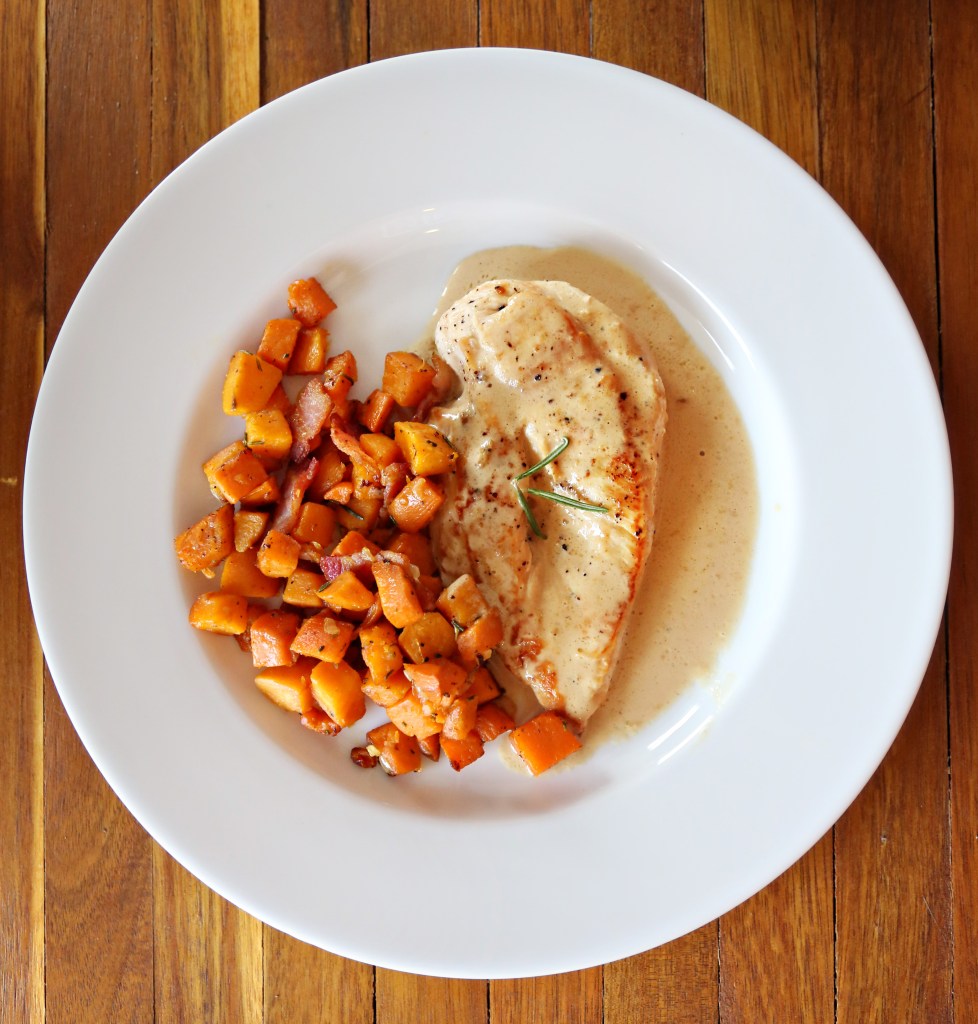
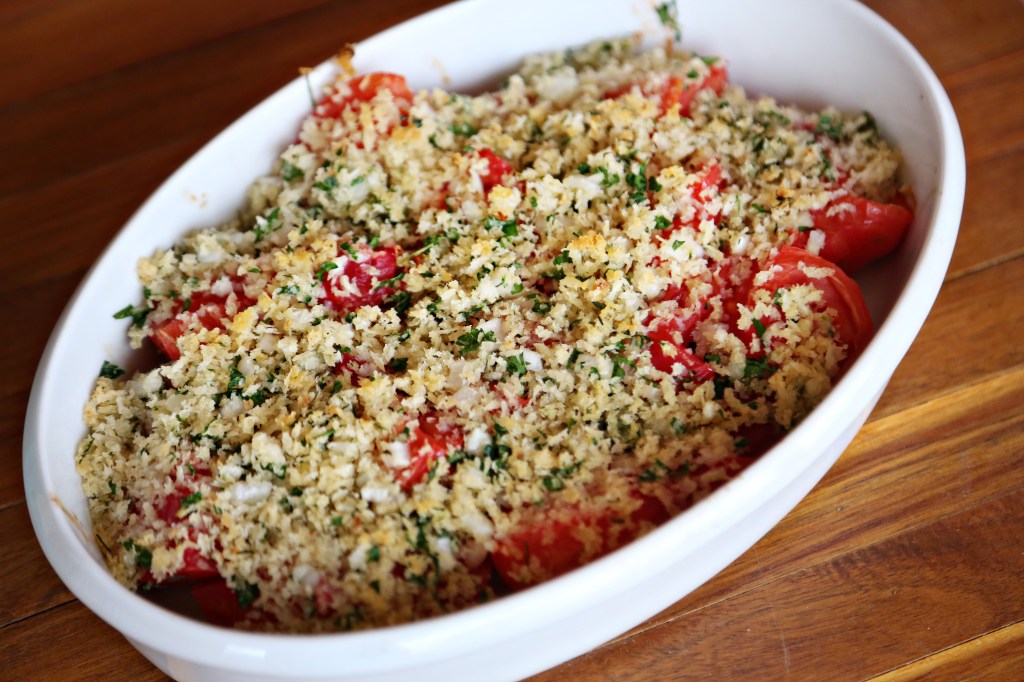
This simple meal comes, once again, from Wini Moranville’s book, The Bonne Femme Cookbook.  A simple chicken dish and the sweet potatoes are an excellent finger food for little eaters.  I choose a baked tomato dish from the book as an extra side for this meal.  Everyone at the table enjoyed it all.  Olive liked the baked tomatoes the least and the chicken the most (but she tried everything) 🙂

sweetchick2

Chicken Saute with Sweet Potatoes and Rosemary
serves 4

2 slices thick-cut bacon
Vegetable oil
2 1/2 tbs unsalted butter
2 to 3 large sweet potatoes, peeled and cut into 1/2″ dice (4 cups)
Salt and pepper to taste
1 large shallot, sliced (about 1/4 cup)
1 tbs chopped fresh rosemary
4 boneless, skinless chicken breast halves
1/2 cup low sodium chicken broth
1/4 cup Calvados (apple brandy – can be found at most liquor stores) or 1/4 cup apple juice and 1/4 cup dry white wine
1/2 cup heavy cream

Preheat the oven to 300F.
Cook the bacon in an ovenproof skillet over medium heat until crisp; remove with a slotted spoon and drain on paper towels.  Measure the drippings from the skillet and add enough vetetable oil to equal 1 1/2 tablespoons.  Reduce the heat to medium and melt 1 1/2 tablespoons of the butter with the drippings and oil.  Add the sweet potatoes and salt and pepper.  Cook the potatoes, stirring occasionally, until browned and softened, about 15 minutes; add the shallot and rosemary to the pan after 5 minutes.  Transfer the skillet to the oven to keep warm.

Meanwhile, place the chicken breasts, one at a time, between two sheets of plastic wrap and pound to 1/4 inch thickness.  Season both sides with salt and pepper.

In another large skillet, melt the remaining 1 tablespoon of butter over medium high heat.  Add the chicken in batches and cook, turning once, until no longer pink inside, 6-8 minutes.  Transfer the chicken to a large platter and cover with foil to keep warm.

Remove the pan from the heat and add the chicken broth and Calvados, taking care not to let the liquid splatter.  Stir with a whisk to loosen any browned bits from the bottom of the pan.  Return the pan to the heat, bring to a boil, and boil until the liquid is reduced to 1/3 cup – this should take about 2 minutes, depending on the heat and your pan size; it will take closer to 4 minutes if you’ve substituted apple juice and wine for the Calvados.  Whisk in the cream and cook to a desired consistency.  Adjust salt and pepper to taste.

Crumble the bacon and stir it into the sweet potatoes.  Arrange the chicken on four dinner plates, arrange the potatoes around the chicken, spoon the sauce over the chicken and serve with Tomatoes au Four (recipe below).

Tomatoes au Four

Tomatoes au Four
makes 4 to 8 servings

4 medium-sized ripe tomatoes, cored, halved and seeded
1/2 cup panko bread crumbs
1 small shallot, finely minced (about 2 tbs)
1 large garlic clove, minced
2 tablespoons finely chopped fresh parsley
1 teaspoon snipped fresh thyme, or 1/4 tsp dried thyme, crushed
Salt and pepper to taste
2 tbs extra virgin olive oil

Preheat the oven to 400F. Lightly oil a baking dish large enough to hold the tomatoes without too much crowding.  Place the tomatoes, cut sides up, in the baking dish.

In a small bowl, combine the bread crumbs, shallow, garlic, parsley, thyme and salt and pepper.  Stir in the olive oil.  Spoon this mixture evenly over the tomatoes.

Bake until the tomatoes are hot and the bread crumbs are lightly browned, about 15 minutes.


Confession Time and a Side Dish You Never Thought You’d Love

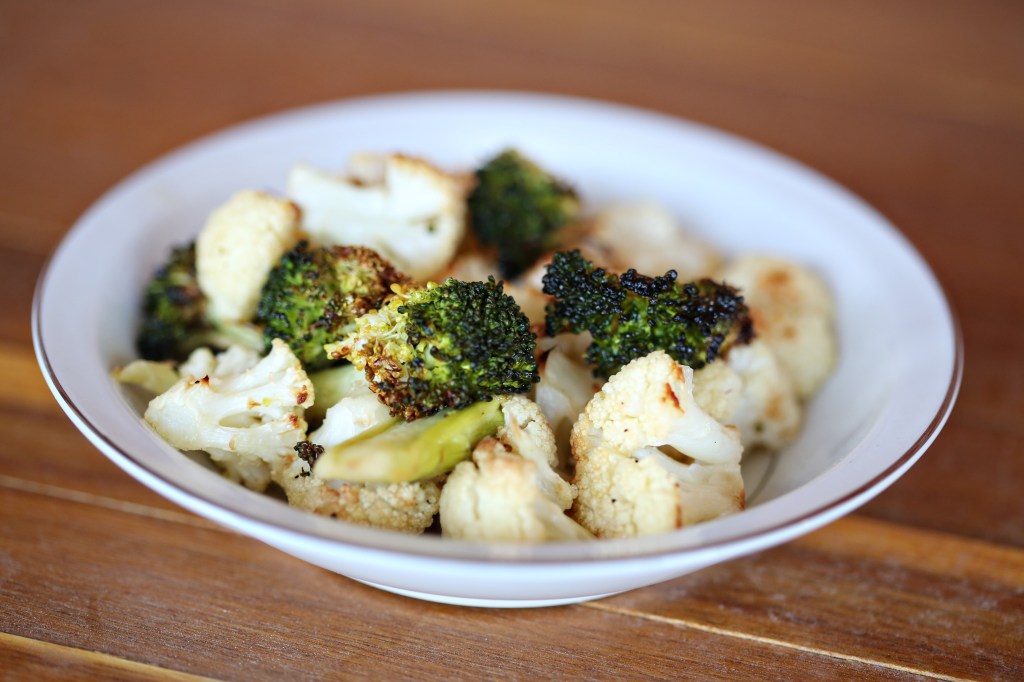
roasted broccoli

I said I’d be honest on this blog and today is just such a post.  Last week, a sweet friend of mine said, ” You are officially one of those moms that makes me question my ability to fully parent and live well/completely.” I wasn’t exactly sure what to do with that comment, but I think I know, now.  It’s time to be honest!  Last week wasn’t good.  Olive got sick on Tuesday with her first stomach bug in her little year on this earth.  It wrecked her appetite, needless to say, and she subsisted for the rest of the week on mostly bananas, bits of bread, small bites of chicken and forced bites of a few benign vegetables like carrots and…carrots.  My little super-eater turned into the “picky eater” kid and even today, isn’t back at full steam.  She plays fine, acts fine, but when it comes to eating – it’s a fight.

I tried my best to stay the course; don’t force her, don’t get stressed, if she doesn’t eat much at lunch, she’ll catch up at dinner – but I was fearful all week that this stomach bug would make her afraid of food, of eating, of trying new things and in one week, all would be lost.  You think I’m exaggerating for the sake of this blog.  I wish I was.  I guess, today, my confession is that I try too dadgum hard to make things go perfectly, and when they don’t, I feel like an utter failure.  Perhaps this isn’t the day to write because last night I slept maybe three hours (my inability to turn my brain off and relax) but I thought about my friend’s comment on my status, and I just wanted to tell her that we only show our best online.  We only write statuses we are either proud of or find ironically funny.  So no one heard all week how scared I was that Olive was sick, or how miserable I felt when she wouldn’t eat a bite all day for a couple days in a row.  And of course I didn’t write statuses about how I got angry with her and made her cry because she kept dropping food off the side of the high chair.  I don’t like writing about that part of life.  The hard part.  The part that makes you question if you’re doing everything wrong and will, inevitably, scar your child when it’s all said and done.  I thought, “How much would everyone love if Olive ended up hating a variety of food just because I want her to love food so much?”  And it’s sad, but I really do feel that most of the people I know would secretly laugh if that happened.  And I can’t say that I blame them.  I’m very passionate about cooking and food and banning “kid-food” and teaching children to eat well and have manners at the table.  I wouldn’t say that I have much camaraderie in that area, at least not locally.  Or maybe I just don’t feel it because I’m not admitting to the hard parts that happen, as well.  I’m only telling you that she ate baby bok choy with fish sauce vinaigrette last week and loved it.  Not that she cried big, fat tears today because I wouldn’t let her hold a fork while she ate (she’d just throw it or poke herself in the face).  Sigh.

Our hard week came to a head this morning as Olive had her one year check up and got 5 shots in her little legs.  So, I made a soup for her for lunch.  Cream of celery, and I pureed the heck out of it so that there’d be no chunks.  I just didn’t feel like challenging her today. She ate fine.  Not as much as last week, but enough.  And I will continue to do what I know in my heart to be best.  Let her be a person with feelings and a new found opinion on things, and try not to force her to like something just because I do.  She’ll come around.  And if today, she only wants the texture of soups and yogurt, then that’s fine.  Maybe tomorrow she’ll eat something more challenging.  The point, I think, is to get back to the heart of what makes food and cooking beautiful: it’s something to be shared.  Eating, first, should be enjoyable.  Not nutritious, not organic – but delicious.  Good for the soul.  Shared with family and friends.  Happy.  Stress-free.  Not another lesson to pass or fail.  I vow to back off in my intensity for success at having a “good eater” a bit and get back to what makes food so amazing.  It’s good.

An incredible way to enjoy a couple of vegetables that might not be everyone’s favorite is first: roast them till they’re a little crispy.  And second: toss them in a vinaigrette!  In today’s recipe, that vinaigrette is one that contains fish sauce and it’s incredible.  I know you wouldn’t typically put “fish sauce” and “incredible” in the same sentence, but you’ll start to once you try this.  Also, it’s from David Chang’s genius book, Momofuku, and I’m pretty sure he’s never made anything bad in his life.  It’s so simple and the vinaigrette recipe makes a lot, so you can save it in your fridge to toss with pretty much any roasted vegetable.  The original recipe called to toss it with roasted brussels sprouts, which is a vegetable most think they don’t like.  But I’m pretty convinced you’re always just one recipe away from liking something you thought you never would.  So!  Try this today and let me know what you think.  Fish sauce can be found in most Asian sections of supermarkets near all the soy sauce, but if you have trouble, you can definitely find it at any Asian mart in town.

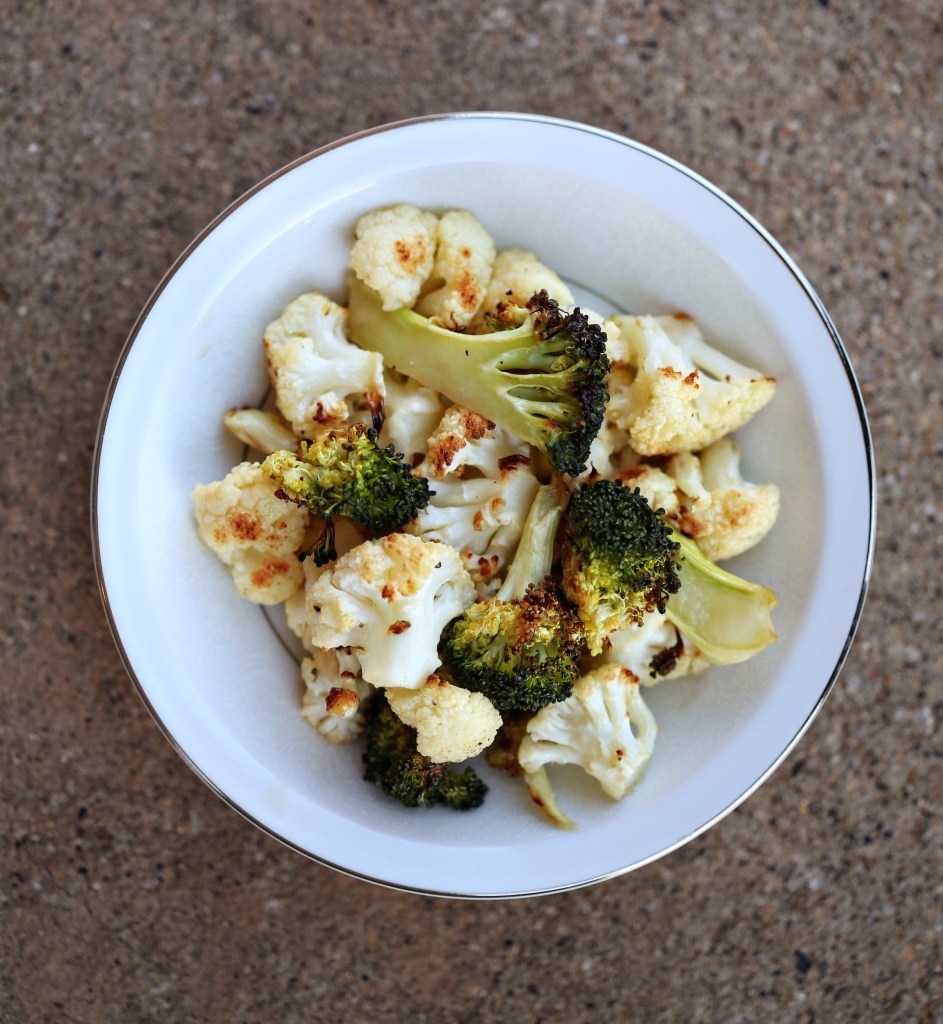
roasted broccoli and brussels sprouts


Roasted Broccoli and Cauliflower with Fish Sauce Vinagrette

1 medium head broccoli
1/2 head cauliflower
Olive oil
Salt and pepper to taste
4 tbs Fish Sauce Vinaigrette (recipe follows)

Preheat oven to 400F.  Cut up the broccoli and cauliflower into small, bite sized pieces.  I trim the “trees” in half so that they roast better.  You want to aim to make the size of your vegetables all nearly the same so they cook at the same rate.  Toss in a couple tablespoons of olive oil and spread out on a large rimmed baking sheet.  Don’t crowd the pan.  Put it on two pans if you need to.  Sprinkle with salt and pepper and roast for about 20 minutes, or until they start to get kinda crispy and browned on the edges like in the photo above.  When they’re done, toss in a large bowl with the vinaigrette and serve immediately.  For some reason, broccoli gets cold faster than any other vegetable known to man.

Fish Sauce Vinaigrette

1/2 cup fish sauce
1/4 cup water
2 tbs rice wine vinegar
Juice of 1 lime
1/4 cup sugar
1 garlic clove, minced
1 to 3 red bird’s-eye chilies, thinly sliced

Combine everything in a large mason jar with a tight fitting lid.  Or any container with a tight fitting lid that won’t leak.  Shake it all around until the sugar dissolves.  Keep in the fridge for up to a week.

Cod with Brussels Sprouts and a Garlic Cream Sauce

codsprouts

I ran across a wonderful blog the other day that is an answer to a question I’d been asking myself since I first read Bringing up Bebe and French Kids Eat Everything.  What is a good example of a weekly menu that a typical Frenchie would have in their home, every day, WITH a baby?  Behold, the lovely blog, French Foodie Baby, written by a French woman who lives in L.A.  At the beginning of the week, she posts a menu of what they’ll be eating for lunch, snack (gouter) and dinner.  I love how adventurous she is with her cooking and while she has the luxury of living in a city with tons of markets and options, I have found that I can adapt the recipes pretty well for us.

French kids only have one snack per day and it’s usually at 4 p.m.  We’ve already started this habit in our house with Olive that she doesn’t eat anywhere but the table, and she only gets one snack around 3 or 4.  If she acts hungry 30 minutes before dinner, either Matt or I will go distract her in the other room by playing until dinner is ready.  She is usually quite hungry for lunch and dinner and does pretty well at restaurants because she’s hungry and will eat as long as we do (while turning 360’s in her high chair to check out the scene, of course.) As two moms at a restaurant pointed out the other night, “She’s been sitting here for an hour! Well, just wait till she’s two…”  Ah, the “just you wait” threat.  Moms give it to me on a weekly basis.  I am fully aware that a year old is way different than two, and that we will have to be extremely diligent in our efforts at mealtimes, but I’m confident that starting now, instead of at two, or whenever the eating issues arise, will make things much easier for us in the future.

This fish recipe was taken from the French Foodie Baby blog nearly word for word.  We enjoyed it very much, but I will warn that if this is the first time your baby has had roasted garlic, go easy.  (she suggests the baby be 8-10 months old for trying this for the first time.  We gave Olive’s portion a rough chop so they’d all be bite-sized pieces) Olive’s diaper the next day was…epic.  My fault.  She’d had plenty of garlic before, but maybe it was just too much?  Anyway, I would suggest straining out the garlic clove before preparing a small portion for your baby.

codsproutscream

Cod with Brussels Sprouts and Garlic Cream Sauce

Serves 4

1 lb Brussels sprouts

5 garlic cloves
1 1/4 cup heavy cream
1 lb cod fillets (this turned into two large filets for me, but I cut it down into 4 portions)
4 thin slices of pancetta (I had proscuitto in the fridge and it worked just fine)
4 pinches of caraway seeds
Salt & pepper
Preheat the oven at 350°F.
Bring a large pot of salted water to a boil. Quarter the Brussels sprouts and wash them. Plunge them in the boiling water for two minutes, drain them and cool them off under cold running water. Set them aside on a kitchen towel.
Wrap the garlic cloves (unpeeled) in parchment paper and bake them for 15 minutes.
Remove the skin and mash them with a fork. Combine with the heavy cream in a small saucepan and set aside.
Cut the cod into four pieces, and cut 4 squares of parchment papers.
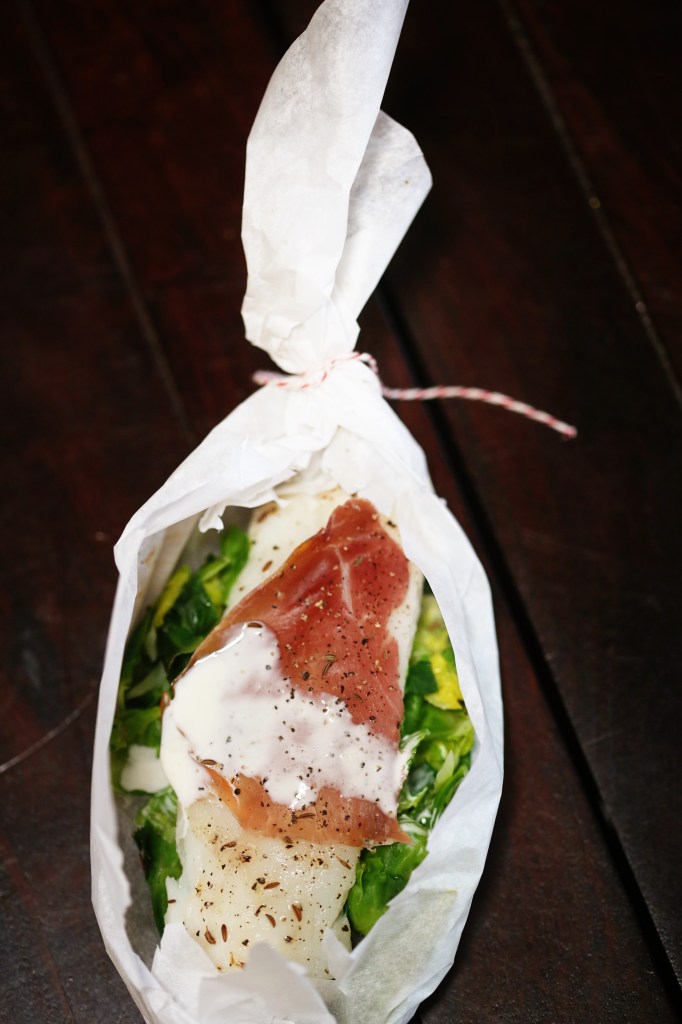
On each square of paper, place a bed of Brussels sprouts, a piece of black cod and a slice of pancetta on top. Sprinkle with pepper and some caraway seeds.
Wrap the parcels and tie each end with kitchen string.  (Note: you can make these ahead of time and keep them in the fridge until ready to bake)
Place the four parcels directly on the bottom of the oven and bake 12-15 minutes.
Place the saucepan with the garlic and cream over low heat. Add a sprinkle of salt and some pepper. Bring to a low simmer.
Place each parcel on a plate, open it and pour the cream of garlic over the fish.
codsprouts finished

Italian Pot Roast on a Snowy Day

snow1

It’s a day to be a little quieter, more reflective, or maybe just be still.  It snowed last night more than it’s snowed in a few years and it’s still coming down outside.  The wind is crazy as it always is in Lubbock, TX, which makes the wind chill around negative ridiculous.  Matt is getting to work from home – one draw back of having a desk job is that on a snow day, you still have to work.  But at least it can be done from the comforts of home.  Hot cups of coffee and a sweet, bundled up baby in tow.  I had dreams of going to the grocery store today to stock up for another week of good meals, but I think I’ll just warm up the amazing pot roast we had last night, roast an acorn squash till it nearly burns and make do with what we have.  If you have any cut of meat in your freezer like a roast, pork loin, whole chicken, try this recipe.  Stay in out of the cold and just let the oven do the cooking today.

pot roast

Pot Roast of Beef Braised in Red Wine*
6 servings

Vegetable oil
4lbs boneless beef roast, preferably chuck
1 tbs butter
3 tbs onion, finely chopped (about 1/2 of a medium sized onion)
3 tbs carrot, finely chopped (about 1 medium sized carrot)
1 1/2 cups dry red wine (Barolo, California Syrah, Zinfandel or Shiraz are all fine choices)
1 cup beef broth
1 1/2 tbs chopped, canned Italian tomatoes (we use Cento brand)
A pinch of dried thyme
1/2 tsp fresh marjoram or an 1/8 tsp dried
Salt
Black pepper, fresh ground

  • Preheat oven to 350F.
  • Put just enough vegetable oil in a large skillet to coat the bottom of the pan.  Turn the heat on to high and when the oil starts to shimmer, put in the roast.  Brown it well on all sides, then transfer to a platter and set aside.  Set aside your skillet without cleaning it out for use later.
  • In a separate pot with a tight-fitting lid, large enough to accommodate the meat, put 2 tbs of vegetable oil, the butter and the onion and cook on medium until the onion becomes a pale gold color.  Add the carrot and celery.  Stir thoroughly to coat well, and cook for 4 to 5 minutes, then add the browned meat back into the pan.  (We used a dutch oven)
  • Pour the wine into the skillet that you’d used to sear the roast, turn on the heat to medium high, and allow the wine to bubble briskly for a minute while scraping the pan with a wooden spoon to loosen cooking residues stuck to the pan.  Add the contents of the skillet to the pot with the meat.
  • Add the beef broth.  It should come up two-thirds of the way up the sides of the meat, and if it doesn’t add more broth or water.  Add in the tomatoes, thyme, marjoram, salt, and several grindings of pepper.  Turn the heat on to high, bring the contents of the pot to a boil, then cover the pot and put it on the middle rack of the preheated oven.  Cook for about 3 hours, turning the meat every 20 minutes or so, basting it with the liquid in the pot, which should be cooking at a slow, steady simmer.  All the liquid may evaporate before the roast is done.  If that happens, add 3 or 4 tablespoons of water.  Cook until the meat feels very tender when prodded with a fork (about 3 hours.)
  • Remove the meat to a cutting board.  If the liquid in the pot is too thin and hasn’t reduced to less than 2/3 cup, put the pot on the stove on high heat and boil down, while scraping the cooking residues stuck to the pot.  Taste the juices and correct for salt and pepper.  Slice the meat against the grain, put the slices on a warm platter, arranging them so they overlap slightly, pour the pot juices over them and serve immediately.

We served this with roasted carrots and it was the perfect accompaniment.  I hope you all have a warm, cozy day and enjoy the momentary break from reality!

*Recipe adapted from Marcella Hazan’s amazing book, Essentials of Classic Italian Cooking