Caramelized Onion Dip

pan fried onion dip

Every summer, certain things tend to become a trend.  We nearly always have an official corn dish, a certain way we assemble a burger from the grill, a particular drink we make over and over, or a particular ice cream flavor we bring to parties. It’s so much fun looking forward to the hot summer months by way of what we’ll be cooking.  It really helps utilize what’s in season (think: guacamole, caprese salad from REAL tomatoes and backyard basil, etc) and this summer, I think I’ve found the official dip/spread!

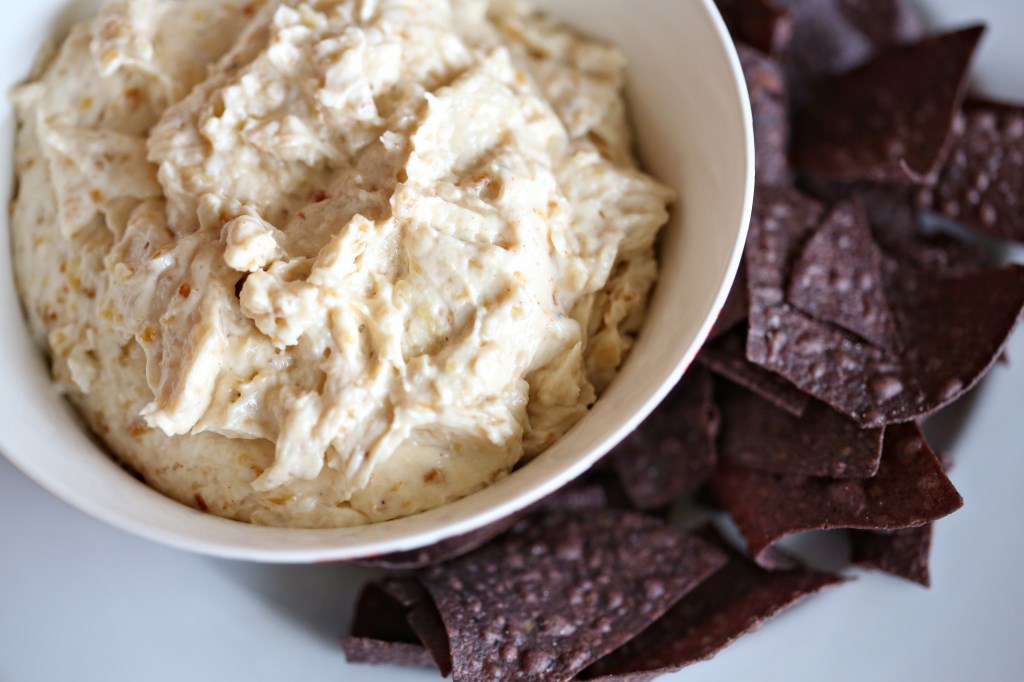
This dip would be amazing as a burger spread, a dip for tortilla chips, crackers, etc.  A wonderful topping for baked potatoes, a dip for fries – the options are endless.  I’ve always been a fan of the tubs of French Onion dip in the grocery stores, but this homemade version blows any of the store bought options out of the water.  It has a sweet smokiness from the caramelized onions, a super creaminess from the addition of the cream cheese and my addition, a tablespoon of red wine vinegar, really makes the flavors come alive and gives it a bite that cuts through all the richness.  It’s perfect.  I also decided to spin all the ingredients in my food processor a few times because I liked the idea of the onions being finely chopped instead of left in long slivers.  I think for me, it’s a more pleasing texture as a dip.

However you decide to make it, just promise me you’ll try this one at your next BBQ.

onion dip


Caramelized Onion Dip*
makes about 2 cups

2 large yellow onions
4 tablespoons unsalted butter
1/4 cup vegetable oil
1/4 teaspoon ground cayenne pepper
1 tbs red wine vinegar (really, any vinegar you have on hand will do just fine!)
1 teaspoon kosher salt
1/2 teaspoon freshly ground black pepper
4 ounces cream cheese, room temperature
1/2 cup sour cream
1/2 cup good mayonnaise (we use Hellman’s original)

Cut up the onions into very thin slices.  Place in a large skillet with the butter, vegetable oil, salt and cayenne and let it cook over medium low heat until the onions turn golden, and caramelize, about 30 minutes.  You really want to err on the side of TOO caramelized instead of not enough.  The flavors get so intense as the onions break down.  Let the onions cool and set aside.

Add the vinegar, salt and pepper, cream cheese, sour cream and mayo to your food processor and pulse a few times to combine.  Then add the onions and pulse until fully incorporated.  If you don’t have a food processor, just dice your onions before you cook them, and then take all the ingredients to a bowl or mixer and mix until smooth.

Adjust the seasonings and serve with…anything!

*recipe adapted from this site, who took the recipe from The Barefoot Contessa cookbook.


Turkey Meatball Stroganoff

turkeystroganoff003

For your Monday family meal, I am presenting something truly comforting, low in fat and wonderfully flavorful.  Coming, again, from Tyler Florence’s book, Start Fresh, this recipe appears at the back of the book where a few dishes are listed that the whole family can enjoy and be modified for any stage eater.  If I were feeding this to 9 month old Olive, I would smash up a meatball into tiny pieces (they are really soft, anyway) and I would take some of the sauce and pulse it a few times with a few noodles.  I’d even have taken a bit of everything for 6 month old Olive and blended it all up with some extra sauce!  I was never too worried about feeding her a huge variety at an early age.  For 15 month old Olive, this meal is a free-for-all.  I’m really strict when it comes to what and when she eats, but as for how, I still cringe, but I do let her eat with her hands, smash things in her face and even try and “smell” everything (which results in food up the nose).  I know I have a lot of guidelines, so I try my best to not stress too much about the mess.  I still won’t dump a scoop of spaghetti onto her try and leave her to it.  I have boundaries, you know.  🙂  But I think WHAT she eats and the way we treat mealtimes is more important than having to hose down the high chair.  (I’m preaching to myself.  This is a life lesson for me and my need to control things too much!)

turkeystroganoff002

Turkey Meatball Stroganoff*
Serves 4 to 6

1 slice multigrain bread (I used rye) or about 1/2 cup plain breadcrumbs
1.5lbs ground turkey
2 tbs whole milk
1/2 cup yellow onion, minced
1/2 tsp caraway seeds, crushed (just dump some in a plastic bag and roll over them with a rolling pin if you don’t have a mortar and pestle)
Pinch of kosher salt
2 tbs extra virgin olive oil
1 garlic clove, chopped
6 ounces sliced mushrooms (any kind)
1 sprig fresh thyme
1 tbs AP flour
1.5 cups low sodium chicken stock
2 tbs sour cream or unsweetened yogurt (I used the latter cause that’s what I had on hand!)
2 tsp Dijon mustard
8 ounces cooked egg noodles (I like the extra wide for baby hands to grasp!)
2 tbs chopped fresh parsley

Chop or pulse the bread in your food processor (or with a knife) until very small and crumbly.  In a large bowl, mix the turkey together with the bread, milk, onion, caraway seeds, and salt until combined (err on the side of too wet and add more milk if it seems dry).  Shape the turkey mixture into about fifteen 2-inch meatballs.

In a large skillet, heat the oil over medium heat until shimmering.  Add the meatballs and cook, turning often, until browned, 5 to 7 minutes (I have to use a meat thermometer for turkey and make sure I get the centers up to 160).  Transfer the meatballs to a plate.

Add the garlic to the same skillet and cook over medium heat for a minute or two.  Add the mushrooms and thyme and continue to cook, turning often, until the mushrooms are golden.  Sprinkle the flour over the mushrooms and stir to coat.  Stir in the chicken stock and cook, stirring, until the sauce has thickened, 5 to 7 minutes.

Whisk in the sour cream and mustard until smooth, then return the meatballs to the pan.  Turn to coat with the sauce.

Spoon the meatballs and sauce over the noodles and serve garnished with parsley.  I didn’t think this recipe made enough sauce, just FYI, so I think next time, I’d double the parts for the sauce.  Word to the wise!  I like leftover sauce and for the noodles to be absolutely coated!

*recipe adapted from Start Fresh

Champagne Mangoes and a Glorious Mango Curd

mango curd macaron dish

When we were in Mexico City last year with our friends, Cali and Alex, we were introduced to the ultimate mango.  Small, lemon yellow and sweeter than a peach.  Cali showed us that there was a specific mango fork that you need to peel it properly, and then she went on to show the proper way to peel and dice up these golden nuggets of wonder. She is my unofficial mango-expert.  I will forever associate her with this wonderful fruit and every time I peel one, I always think, “Is this how Cali would do it?”   I had never experienced a mango like the ones in Mexico, before, and when we got back home, I was on the look out.  I was so excited to see one that looked very similar at the grocery store called Champagne mangoes, and the next time Cali came over, I had her confirm its validity.  We had a winner!  So now, whenever I see that they are in abundance at the store, I get a half dozen.  The last time I did, I let them go too long before eating them, and faced the fear of letting them go bad.

So, I decided that I wanted to make a mango curd.  I looked up a recipe and it called for 15 ounces of mango and that’s exactly how much I had.  The recipe turned out so well, I filled macarons with it and also filled citrus cupcakes with the curd and topped them in coconut cream cheese frosting.  Epic win for the cupcakes, epic fail on the macarons.  The macarons tasted great, but the cookie itself didn’t turn out very well.  They all went hollow!  I have made macaron cookies before and the best I can describe them is that they are the croissant of cookies.  Every batch is different, every recipe is different and their success depends on so many factors, it’s a little maddening. The quality of the ingredients, the humidity in your kitchen, the exact temp of your oven, etc, etc, etc.  I surprised myself and didn’t FREAK OUT when the first batch of cookies EXPLODED, the second batch was pretty perfect, and the third batch baked like the first.  A true testament to how baking is a fickle beast.  They at least looked pretty:

mango curd macarons

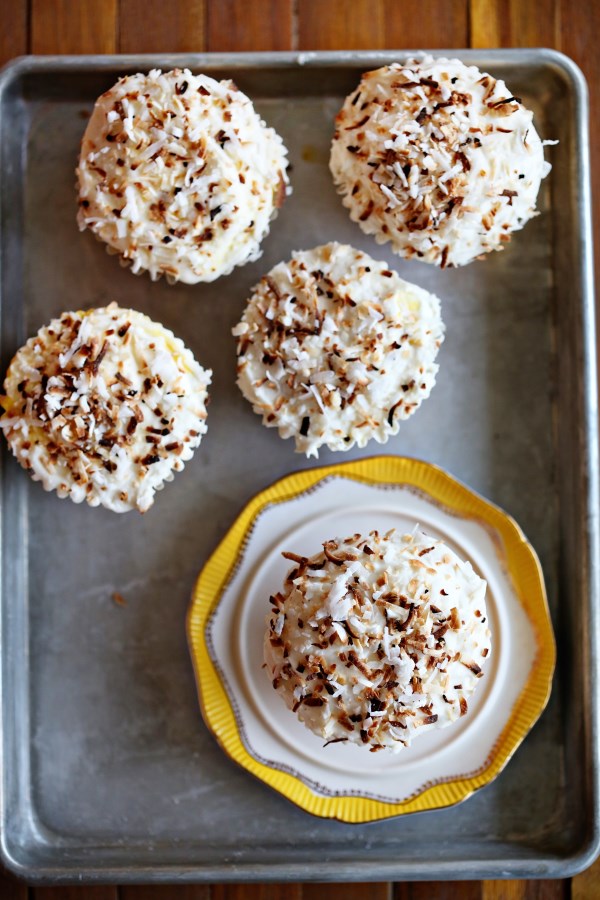
The cupcakes, on the other hand, were a no-brainer.  I took a basic yellow cake recipe and added in Fiori di Sicilia, then made a cream cheese frosting, added a bit of coconut extract and topped each with toasted coconut after filling the cupcakes with the mango curd.  Such a wonderful combination, that I wanted to share those recipes with you, today, but mainly, this mango curd is the winner.  A week later, I still had some in a jar so they were put on some buttermilk pancakes this morning with fresh blueberries and slices of Champagne mangoes, of course.

mango curd cupcakes

mango cupcakes

Champagne Mango Curd*

Makes 1 to 1.5 cups

15-ounces ripe mango, peeled, pitted, cut into 1/2-inch pieces (It took 5 Champagne mangoes)
1/3 cup sugar
3 tablespoons fresh lime juice
Pinch of salt
4 large egg yolks
1/4 cup (1/2 stick) unsalted butter, cut into small pieces

Puree mango, sugar, lime juice and salt in processor, scraping down sides of work bowl occasionally. Add yolks; puree 15 seconds longer. Strain through sieve set over large metal bowl, pressing on solids with back of spatula to release as much puree as possible. Discard solids in sieve.

Set metal bowl over saucepan of simmering water (do not allow bottom of bowl to touch water); whisk puree until thickened and thermometer registers 170°F., about 10 minutes. Remove from over water. Whisk in butter 1 piece at a time. Cover and refrigerate overnight.

*taken from Smitten Kitchen, who took it from Bon Appetit

Citrus Cupcakes*

1 stick unsalted butter, softened
2 cups all-purpose flour
1 tablespoon baking powder
1/2 teaspoon fine salt
1 1/2 cups granulated sugar
3 large eggs, room temperature
1 cup whole milk
1 teaspoon Fiori di Sicilia, or 1/2 tsp orange extract + 1/2 tsp vanilla

Preheat oven to 350 degrees. Butter and flour 12-16 muffin tins, or just line with cupcake liners and spray those with non-stick spray.  Whisk together flour, baking powder, and salt. Beat together butter and granulated sugar with a mixer on medium speed until combined, 1 to 2 minutes. Add eggs and beat well, scraping down sides of bowl as necessary. Reduce speed to low and gradually add flour mixture, beating until combined. Add milk and extracts and beat until just combined.
Divide batter among cups; smooth tops with an offset spatula. Bake until golden and a toothpick inserted into centers comes out clean, 25-30 minutes. Let cakes cool in pans on wire racks 15 minutes. Turn out cakes onto racks to cool completely before filling.

*adapted from Martha Stewart Living

Coconut Frosting*

1 stick unsalted butter, softened
4 ounces cream cheese, room temperature
5 cups confectioner’s sugar
1/4 teaspoon fine salt
1/4 cup whole milk
1/2 teaspoon pure vanilla extract
1/4 tsp coconut extract

1/2 cup coconut, toasted, for topping cupcakes

Beat together butter and cream cheese with a mixer on medium-high speed until pale and creamy, about 1 minute. Reduce speed to medium. Add confectioner’s sugar, 1 cup at a time, beating well after each addition. Add salt, milk, and vanilla, coconut extract and beat until fluffy, about 3 minutes. If not using immediately, cover surface of frosting with plastic wrap. Frosting can be refrigerated in an airtight container up to 1 week. Before using, bring to room temperature, then beat on low speed until smooth.

*adapted from Martha Stewart Living

To Assemble:

I used the large tip from my piping bag to cut out the centers of my cupcakes and I really went pretty much to the bottom of each cupcake with the cut.  The curd is pretty runny out of the piping bag, so I had to hold it up in the air between fillings.  I inserted the tip of the piping bag and slowly squeezed until the sides of the cupcake bulged a bit.  I like filling.  Then, I just smoothed the frosting on top of each cupcake and sprinkled with toasted coconut.

mango cupcake with coconut frosting

Homemade Salted Butter with Fresh Thyme

butter002

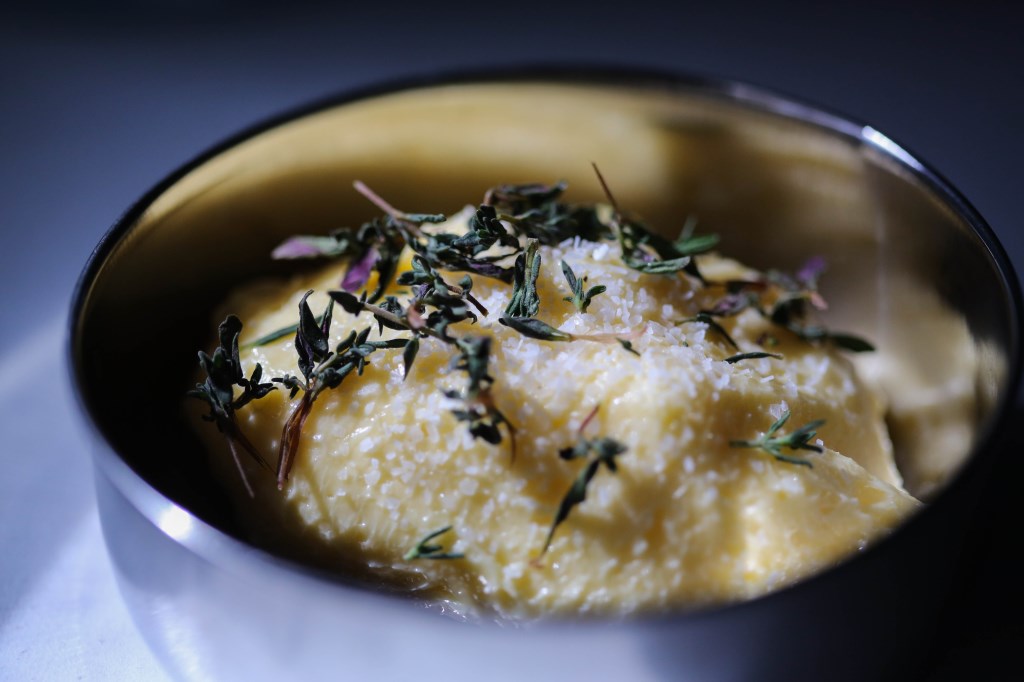
Since we found Pereira Pastures Dairy a couple months ago, I suddenly had access to raw cream and milk, which fulfills my dream of having a milk man.  It doesn’t arrive on my porch in cute, glass bottles, but it does come from a friendly man in Abernathy who does his best every day with the land and beautiful Jersey cows God gave him to make the best product he can.  He treats those cows so well and it shows in his product.  I ordered a couple bottles of cream over the past two weeks and I’m telling you, this cream is legit.  There was only a half inch at the bottom of the bottle where the cream had separated from the rest of the milk.  THAT much raw cream just screams to be made into butter.  So, after being inspired by a story in the May issue of Martha Stewart Living magazine about Diane St. Clair, who makes butter for the French Laundry and Per Se, I decided to make my own.  I went a simpler route than the recipe featured in the magazine and just basically whipped the cream into oblivion until it separated into buttermilk and butter.  I then kneaded it, washed it (washing it makes it last longer) added some salt and sprigs of fresh thyme from my “garden” and voila – I had made my very own compound raw butter.

Making compound butters (essentially butter with stuff mixed in to flavor it) is really easy.  When the butter is at room temp, simply mix in herbs, seasonings, whatever you want and then wrap it up in plastic wrap and chill until firm.  Then, like my salted thyme butter, use it on fish or chicken or just bread for something really wonderful.  Sure, buying butter is so much easier.  And less expensive.  And less messy and time consuming. However, I think doing things from scratch offers a natural inclination for satisfaction and moderation that you just can’t buy.  How much slower you’ll eat butter you made than stuff you can scoop out of a tub!

raw butter001


First, dump cream (I used two cups) into the bowl of a stand mixer fitted with a paddle attachment.  Then, whip on medium high until whipped cream forms.  Then, really, just let that sucker whip until it suddenly separates.  This process can take anywhere from 10-15 minutes of solid whipping.  You should have something that looks like this:

butter001


Strain the buttermilk out and save it to make pancakes or biscuits!

butter004


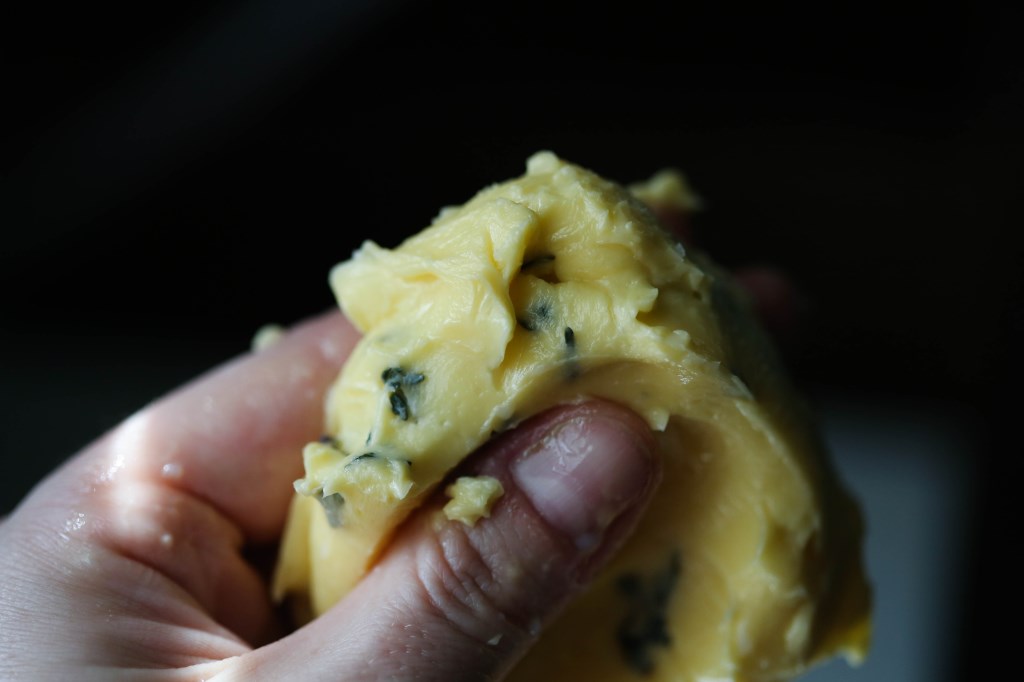
Then, gather the butter solids and knead them in your hands under running water, squeezing the excess buttermilk out.  Then, you can either leave it alone for plain butter, or mix in salt and herbs, like I did here:

butter003


Then, transfer to a sheet of plastic wrap, form into a log and refrigerate until firm.  Or leave it out on the counter if you’ll be using it right away.

butter005


And for a simple approach, just slice it and eat it on a cracker 🙂

raw butter001

Fish Sticks and Sticking to Your Guns

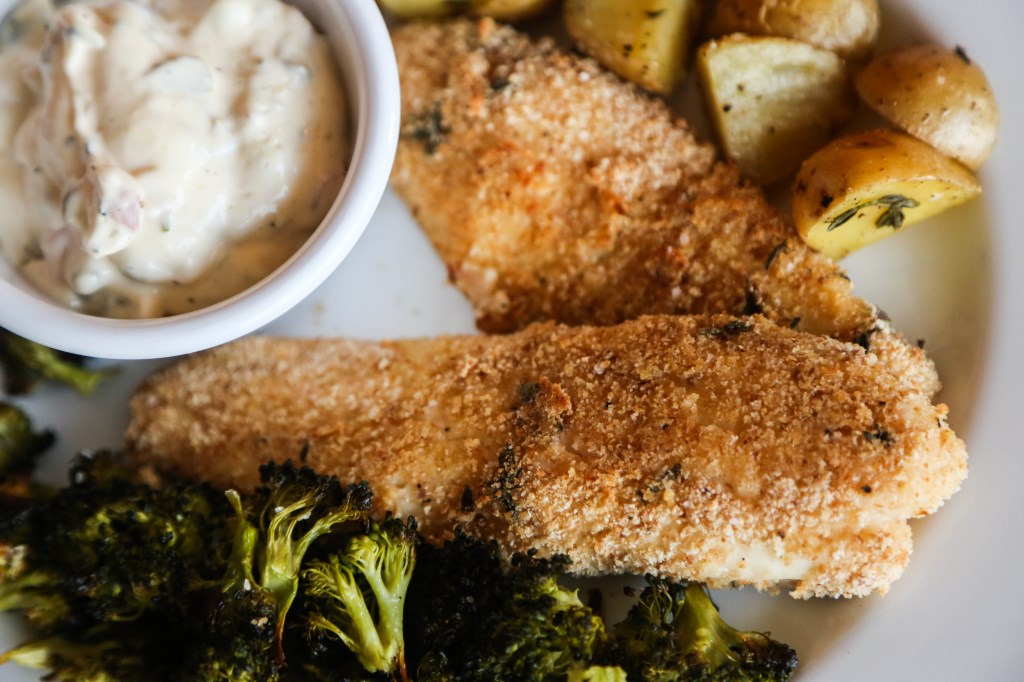
fish and taters001

The method is working.  We have a few food rules when it comes to feeding Olive and ourselves.  All these thoughts are fueled by the game-changing book, “French Kids Eat Everything“.  I highly recommend it if you find yourself stressed that your kid eats a limited selection of foods.  Babies don’t know snacking exists.  They learn it soon enough from peers and tv and observing adults who randomly nibble throughout the day, but in the formative first couple years of life where you have most of the control over what your baby consumes, you can show them a different way.  And maybe even learn to eat better, yourself!  Olive gets one snack a day. Yes, she’s 15 months old (almost) and only snacks once a day. (And it’s a good one! Something fun and really tasty. Usually a piece of fruit or some dark chocolate and bread with milk.  You gotta make it something they look forward to.)  It’s in between lunch and dinner, because that’s the longest stretch without food.  We also have to emulate this discipline for her.  How would it be fair to snack in front of her without including her?  And if I want her to be hungry enough at a meal to be willing to try something new, well darn it, she needs to not have eaten a snack an hour before dinner!  Makes sense to me and it seems so obvious, yet so few do it.  We should all eat this way!  Hunger is a discipline that too few of us experience. And the discipline is learned before the age of two.  It can be learned if started after two, but it’s just so much harder (think: excessive whining).

We’ve even pushed dinner back to 7:30 the past few nights and she has eaten EVERYTHING.  Whereas before, I was serving dinner at 6:30 and it was a fight to get her to eat for 10 minutes straight (she’d had her snack just two hours before and had drank milk in between, so, consequently, she was only mildly interested in dinner.)  Eating an hour later has been a transformation –  she ate marvelously and ate everything from fish to broccoli to berries to a nice piece of Manchego (the King of Cheese).  So, it’s working!   The next day, she ate like a bird and acted like bananas were the devil (a  former favorite). Even if she has days like that, I try to remind myself that she will not starve and that maybe she’ll eat more at the next meal (this is SO hard.)  This structure of eating has made my days better, too.  I don’t have to constantly find something for her to eat.  Other than her snack, we’re all eating at the same time.  This will get harder as she gains the ability to ask for things and tell me she’s hungry.  I’ll tackle that problem when it gets here.  Hopefully between now and then, she’ll form the habit of knowing when food is served and being willing to wait till we can all sit at the table together for the family meal.  Also, because she eats so much quantity at each meal, she’s often not even that hungry until about 30 minutes before the next meal. So waiting for the meal is as simple as distracting her with playing in another room with Matt, or just including her in the cooking process like holding the herbs, or a peeled carrot, or whatever.  She sits on the counter a lot 🙂

The recipes today come from two cookbooks.  The fish recipe came from Tyler Florence’s book, Start Fresh, which is an absolutely wonderful book filled with recipes I would be just as happy eating as I would serving them to a toothless baby or toddler.  Toward the end of the book, there are recipes for the whole family to share.  My wonderful friend, Becky, sent this cookbook to me as a gift to me and Olive, and she put sticky notes all throughout the book with comments she made about which recipes looked good, which she wanted to try, etc.  It made me miss her so much and long for my genius-in-the-kitchen friend to be beside me, cooking and enjoying these recipes with me.  I’d recommend doing that to any cookbook you buy for someone – it just made it seem like she was here with me as I looked through it.

The tartar sauce recipe comes from the Bonne Femme cookbook and I swear to you, this is THE best tartar sauce I’ve ever had.  It puts every other tartar sauce to shame.  Makes them seem like a joke.  Like mayo with pickles.  This has tang and zip and crunch and so much flavor, I really will never feel satisfied eating any other tartar sauce, ever again.  (Dramatic, much?)  I’ve made two batches since last week and turned the latest batch into a potato salad.  Amazing.  You can’t go wrong with these recipes and I feel that this would even be an acceptable meal for a kid who does not like everything.  Surely on this plate, any kid could find SOMETHING they were happy to eat!

fish and taters004

Oven Baked Fish Sticks with Roasted Potatoes
serves 4

1/2 cup buttermilk
1 lb cod or tilapia fillets, cut into 1 inch wide fingers
1 cup panko breadcrumbs (I ran out of panko and used plain and it worked fine)
2 tsp fresh thyme leaves
Salt and freshly ground pepper
1 lb assorted baby potatoes, scrubbed and quartered
2 tbs olive oil

Preheat the oven to 400F.  Line two rimmed baking sheet with parchment paper.

Pour buttermilk into a large bowl.  Add the fish pieces and turn to coat.  In another bowl, stir together the panko, thyme, and salt and pepper to taste.  Dredge each fish finger in the breadcrumbs to coat completely and arrange on a baking sheet.

Combine the potatoes (and broccoli pieces, or asparagus or green beans – whatever other green veg you want!) in a bowl and drizle with the oil.  Toss to coat thoroughly, then arrange the vegetables on the other baking sheet.  Bake the fish and vegetables, turning once, until the fish fingers are golden, about 15 minutes.  The potatoes may need longer.  If so, simply take the fish out when they’re done and tent with foil to stay warm.

Serve fish (and potatoes, really) with tartar sauce!

fish and taters012

fish and taters005

Tartar Sauce
makes about a cup

3/4 cup high-quality mayonnaise (we think, aside from homemade, that Hellmans REAL mayo is the best.  No low-fat or miracle whip crap.)
2 tablespoons chopped cornichons (small sour French pickles)
1 small shallot or 1 scallion (white part and some tender green tops), minced (about 2 tablespoons)
1 tablespoon finely chopped fresh parsley or fresh parsley and chives
2 teaspoons Dijon mustard
2 teaspoons capers, drained and chopped
2 teaspoons white wine vinegar or fresh lemon juice
2 teaspoons finely chopped fresh tarragon or chervil
Salt and freshly ground black pepper to taste

In a bowl, gently fold the mayonnaise, cornichons, shallot, parsley, mustard, capers, vinegar, and tarragon together (don’t mix too vigorously, or your sauce will be too smooth). Season with salt and pepper. Cover and refrigerate for at least 1 hour, and preferably 2 hours, before serving. Store, covered, in the refrigerator for up to 1 week.

fish and taters008

Food Memories: Durango Cake

durango004

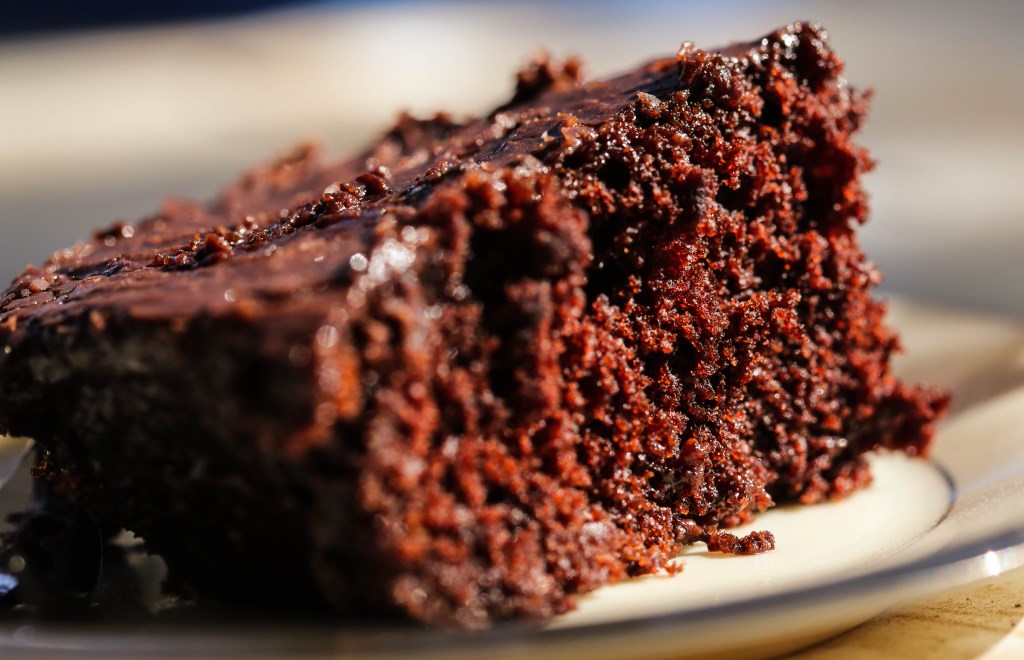
When I polled the Facebook audience a few weeks ago on peoples’ favorite food memories, I was absolutely thrilled with all the responses.  So many unique stories and some that felt as familiar as my own childhood.  From broccoli rice casserole to stewed cabbage.  From Eastern New Mexico to Ireland – so many people had one thing in common: good memories made from a meal and shared with family.  I made it my unofficial mission to tackle a few stand-out comments that included recipes I might actually be able to make.  I got to share the first food memory  with the author herself.  This week, sadly, the author of today’s food memory, my friend from high school, Kelli Morrison,  lives in Oklahoma and can’t partake directly in the cake recipe she so graciously shared with me.  But I have a feeling she’s made it so many times that she won’t feel like she’s missing out TOO much.

This is a glorified Texas sheet cake.  For those who have made and love Texas sheet cake, you will love this cake.  I think the true magic is the icing.  It gets crunchy around the edges and the cake itself is so fluffy and perfectly moist that it truly is the best chocolate cake I’ve ever had.  I think next time, I will add some cinnamon to the cake batter because I love cinnamon and chocolate together, and I think I may make these into cupcakes so that each cake can have icing completely surrounding it!  I may even make a double batch of icing just to make sure I have enough.  I’m telling you, this icing is ridiculously good…

durango002

Here’s what Kelli had to say about her memory of this truly wonderful cake:

Ok, so it’s a cake that was always made in a pan that could be easily traveled with, because we always were taking it places! It all started when my dad was moonlighting as a farm land real estate agent and the gentleman he worked for offered up his RV for us to use on summer vacation. So we took it to Durango for a week. At the last minute, my mom invites my recently widowed grandmother (on my dad’s side) to come with us (like, invites her the night before we’re leaving at the crack of dawn). Grandmother has no money to contribute toward the trip, but stays up that evening and packs her bags and makes this chocolate dream cake. Total hit. The next summer, we end up doing the same trip in the same RV up to our favorite lake for fishing and my brother requests the same cake that grandma brought to Durango last year. Even though grandma didn’t go the second year, my mom got the recipe and made one for the trip. From then on, it was, as my brother put it, “that good ‘ol Durango Cake.” We have made it frequently ever since, and it is always requested for birthdays, church socials, pot luck, holidays-it’s a staple in the Stroud family and among our church friends who have become so familiar with it over the years.
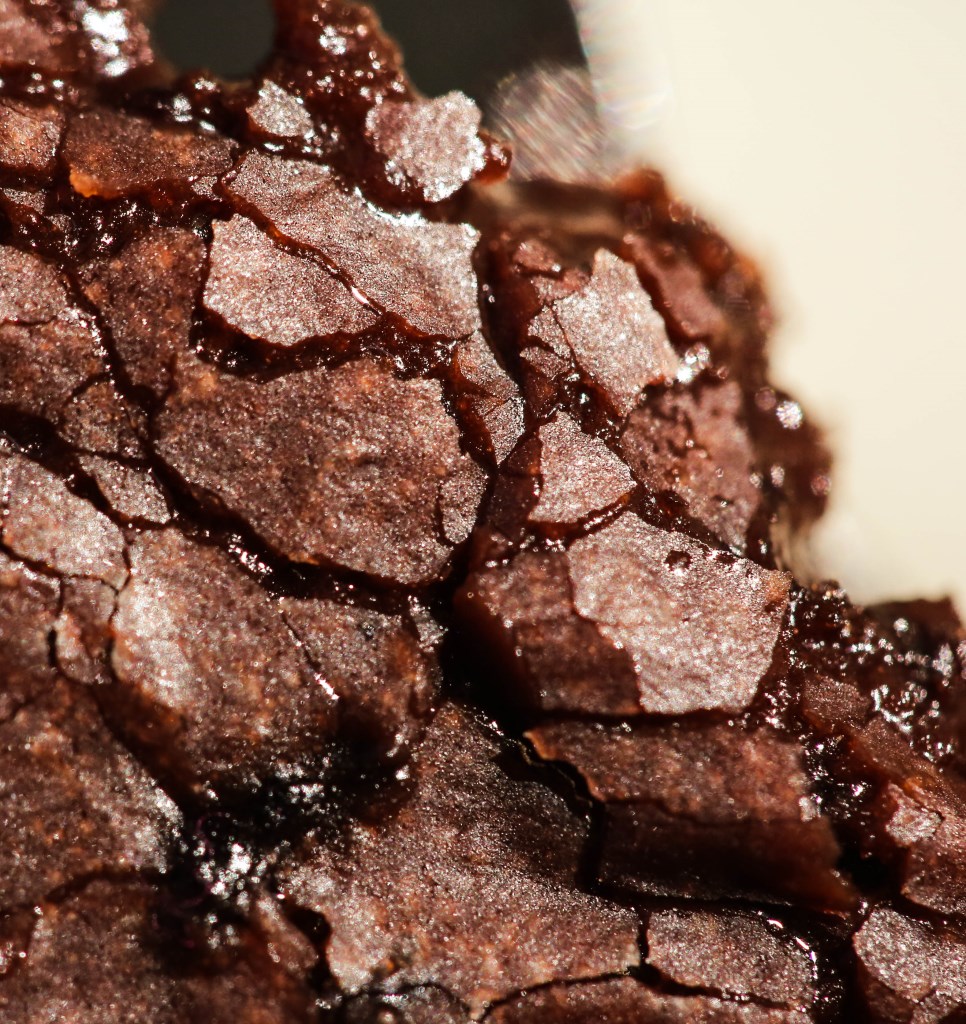
It has a deep, rich chocolate-on-chocolate flavor, with a thin chocolate glaze that is cooked and poured over the top while the cake is still warm (one reason it has to be IN a pan, not on a pedestal). Once the glaze cools, it creates a very thin sheet of icing that looks like broken glass when you cut into it-not thick like frosting. Because the glaze is so runny when you pour it, it usually runs all over the cake and spills over the side, so a side or corner piece is very desirable because the outside edge is covered in glaze as well.
I have been known to take a slice in each hand and scarf it like it’s going out of style just before bed, and then wake up in the morning, put another slice in a bowl, break it up into bite-sized pieces and pour milk over it and eat it like cereal. I know. I’m obsessed. But seriously, this cake is phenomenal.

durango003

Durango Cake

Cake:
2 cups flour
2 cups sugar
1 stick butter
1/2 cup oil
1 cup water
4 tbs baking cocoa
1/2 cup buttermilk
2 eggs
1 tsp baking soda
1/2 tsp salt
1 tsp vanilla extract
Cooking spray for dish

Glaze:
1 stick butter
2 tbs baking cocoa
2 tbs milk
2 cups powdered confectioners sugar
1 tsp vanilla

Preheat oven to 350.

For cake:
In a large bowl using an electric mixer (I did everything by hand), blend flour and sugar well.

In a medium saucepan heat 1 stick of butter, oil, water and cocoa until almost boiling.  Set aside.
In third container (I use a 1 cup glass measure), combine buttermilk, eggs, soda, salt, and vanilla. Whip with a fork until well mixed.
Pour heated mixture into flour mixture and blend. While mixing, add buttermilk mixture and mix well until color is even.

Pour into sprayed or greased 9×13 casserole dish (I use a Pyrex). Bake at 350 for 30-35 minutes.

Allow to cool slightly. While it’s cooling, bring all ingredients for the glaze to a boil in a saucepan on the stove. It is okay if there are several tiny lumps of sugar that don’t dissolve. Remove from heat. Pour the glaze over the top of the cake, ensuring that the whole top of the cake gets covered (you may have to use a spatula to spread it a bit). Some glaze will run down and fill up the edges where the cake has pulled away from the pan. Cover upon cooling.

Note from Kelli: if you have large quantities of vanilla ice cream, it is perfectly acceptable to eat this cake while it is still warm. Otherwise, allow it to cool before serving. It is also acceptable to put fresh sweetened fruit atop this cake when serving. Strawberries, cherries, or especially peaches are quite delicious.

Potatoes Gratin

food-12

This is such a beautifully simple dish.  It’s also quite rich and begs that you throw away your fear of dairy, potatoes and butter and embrace how amazing those ingredients, in combination, can truly be.  This is not the potatoes gratin you are used to where rather thick slices of potato are all stacked on top of each other in a huge dish, covered in cheese.  This recipe actually has no cheese.  I know I’d had the dehydrated versions of potatoes gratin out of the box, and possibly something similar at a buffet, but I’d never tried making it myself until we read the book, Must Have Been Something I Ate, by Jeffrey Steingarten. (This book will change you.)

The section of his book that this recipe comes from is entitled “There is a God in Heaven”, (I love a person as emphatic about food as I am)  with the quote beneath the section headline, “But as luck would have it, there is a God in Heaven.  Medical researchers now know that not all saturated fats are the same, and that cocoa butter does not raise our cholesterol.”  And in that section is an entire chapter dedicated to Gratin Dauphinois (the French created this dish, of course), or Potatoes Gratin.  Gratin, coming from the word “gratter”, meaning, “to scrape”  referring to the crispy bits of cream that get glued to the sides of the pan and scrape off and crunch so amazingly well.  Say no more.

We have eaten this dish as a meal, before, but it goes best as an accompaniment to a really great steak and a really fresh salad or other light side.  Also, don’t make the mistake of serving a rich dessert  after eating these potatoes.  I’m all for indulgence and you will never, ever find me saying that you should avoid entire food groups or ingredients altogether (bring on the corn, cheese, gluten, you name the poison) but I am also not dumb enough to serve a rich dessert after a dish this heavy.  You’d sink all the way to the bottom of the playa lake.  Everything in balance!

food-15

Potatoes Gratin*
serves 6-8 as a side

4 tbs butter, softened to room temp
1 cup whole milk
1 large garlic clove, peeled and lightly crushed
1/2 tsp freshly ground pepper
3/4 tsp salt
1/8 tsp freshly ground nutmeg
1.5 lbs baking potatoes
1.5 cups heavy cream

Preheat your oven to 425F. Place the milk, garlic clove, pepper, salt and nutmeg in a small saucepan, stir, bring to a boil and then remove from the heat.
Meanwhile, liberally butter the bottom and sides of a 9×13″ baking dish, using about half the butter.  Peel the potatoes, rinse them, and pat them dry.  Then, slice them 1/8th of an inch thick, discarding the smallest slices (This is easier with a mandoline) The cooking times really depend on this thickness, so don’t go too much thicker.  Under no circumstances should you wash the potatoes after they have been sliced — the surface starch is absolutely indispensable.

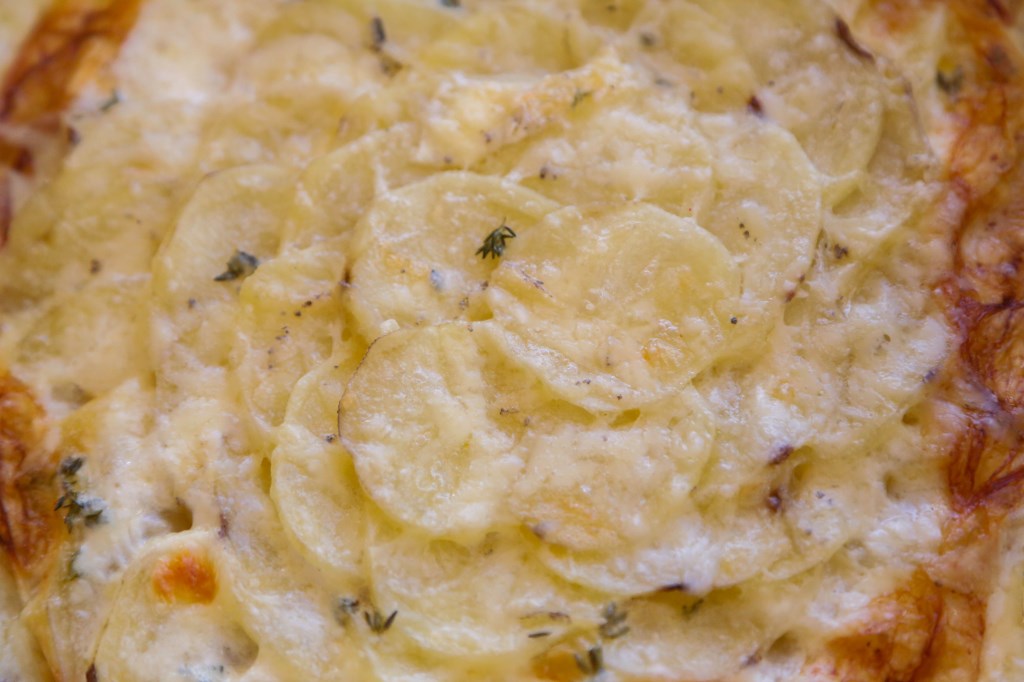
Evenly arrange the potatoes in the buttered dish in ONE LAYER of overlapping slices.  You will undoubtedly have some slices left over.  Don’t try to cram them in.  Bring the milk to a boil again and pour it over the potatoes, removing the garlic.  Cover the pan with a sheet of foil and bake in the middle of the oven for about 15 minutes, until most of the milk has been absorbed.  Meanwhile, bring the cream to a boil and remove from heat.  When the potatoes are ready, remove and discard the foil.  Bring the cream back to a boil and pour it over the potatoes, dotting the surface with the remaining butter.

Bake, uncovered, for another 20 to 25 minutes, until the potatoes have turned golden brown, spotted with darker, crisp areas.  You may need to rotate the dish halfway through cooking to ensure an even browning. We love thyme leaves in this dish and will sprinkle some on when the dish is nearly done baking.  Let the gratin settle for 10 minutes.  Then eat immediately – taste and texture suffer with each passing minute.  Cut into 6 to 8 rectangles and serve with a wide, metal slotted spatula.

*most of the text taken directly from Jeffrey Steingarten’s book.  Go get it!

food-14

Caesar Salad and Chilling Out

food-9

We’ve been trying to eat outside on our patio table more often as the weather warms up and the days get longer.  I want to enjoy myself in this zen-like way where I don’t care about a little extra mess, where Olive eats everything we serve and she isn’t wildly distracted by the dogs and the wind and the trees and the air and where I lean back in my chair, leisurely taking bites of my food and just enjoy the moment and the concept of taking a little longer than usual to eat dinner.  But instead, what has happened the few times we’ve done this, is I get all worked up and stressed trying to feed Olive and trying not to make a complete mess without her in the playful looking restraints of a high chair, and I end up trying to scarf down my food so that I can tend to whatever mess is going on, or try to block Olive from feeding all her food to Cash.

I do this to myself.  (For the record, this stress is only with food and dining – I am okay with a muddy kid or a messy house or whatever – but please, don’t put food in your hair and whatever you do, do NOT drop food from your tray!) I don’t enjoy the experience of something different and out of control, I let that ruin the experience for me.  Now, my sweet husband might just say, “Let’s not eat outside anymore if it bothers you so much!” (always trying to keep me from feeling anything but joy) but I think what I need, instead, is MORE dining experiences where not everything is micro-managed by my desires for things to look and go perfectly.

It happened again this Sunday – we had a picnic in the park with some people from our church group and we brought a tish bit of an ambitious lunch.  Matt had made all the components for this really great Vietnamese pork and noodle salad and everything was so delicious, but I instantly got down about: 1. the wind blowing lettuce and dirt in my face 2. my baby walking around the blanket and the park NOT eating and spitting things out that we tried to make her eat (God bless one of our friends who had the brains to bring a banana 3. just the overall lack of control I had over the components of my meal – it was messy and I needed a bowl and lots of napkins and NO wind, but I didn’t have those things and I became really negative and I am 100% sure I ruined the experience for Matt, who was trying his best to stay positive while eating beside a big rain cloud (me).

Whenever I struggle with sinful things in my life like jealousy or greed or pride or even the need for control (a sin, I believe), I try to do a bit of immersion therapy on myself and directly expose myself to the thing I can’t seem to handle as often as possible until I am over it.  It has worked in the past and I think I will try to apply it here.  I resolve to eat outside MORE often.  To let messiness happen MORE in situations where I’d like to appear perfect, and I resolve to look at my situations like Olive would – like an opportunity she’s never had before and quite possibly might never have again!

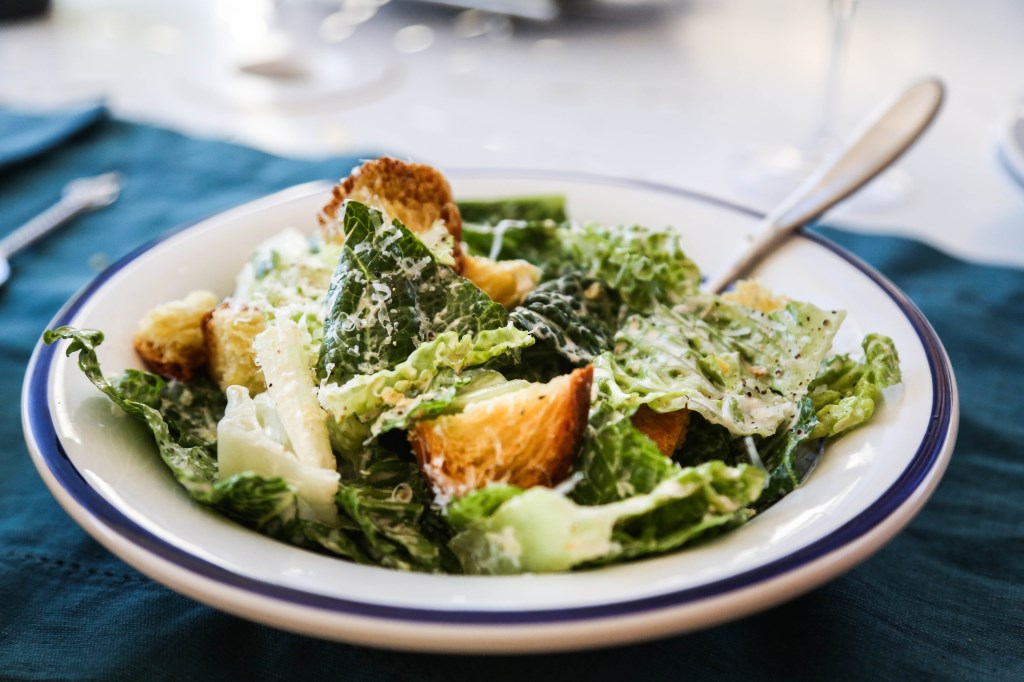
An opportunity you might never have, again, is enjoying a properly made Caesar dressing, because absolutely no restaurants make this dressing right, or from scratch.  This recipe is so flavorful and has just the right balance of tanginess from the lemon and anchovies and creaminess from the oil that it’s nearly like a beautiful, homemade mayonnaise  with a kick!  I see this salad happening a LOT during this hot summer ahead!

food-10

Just a little behind the scenes shot of how I usually take my food photos 🙂

food-11

Caesar Salad with Homemade Croutons*
makes about a cup of dressing

4 tbs lemon juice, plus more to taste
1 clove of garlic, minced
salt to taste
black pepper to taste
1 large egg yolk
4 anchovies, plus more for garnish, if you like
1/2 cup canola oil
3 tbs bacon grease from 4 strips of cooked bacon, or melted butter that has been cooled
Torn up romaine lettuce
Parmesan cheese, freshly grated

Combine all the ingredients except the canola oil in a tall, wide cup and blend with an immersion blender and then slowly drizzle in the oil.  Taste and adjust for seasoning with salt and pepper and extra lemon juice.

Toss leftover cubed up bread on a baking sheet, brush with olive oil, and toast until golden brown.

Toss a couple tablespoons with the lettuce until nicely coated.  Top with croutons, cut up pieces of the bacon and extra Parmesan cheese.  And lots of cracked pepper!

*recipe adapted a lot from Ruhlman’s amazing sounding Chicken Fried Pork Belly Caesar.

Mini Cherry Pies with Brown Sugar Meringue

cherry meringue mini pies-23

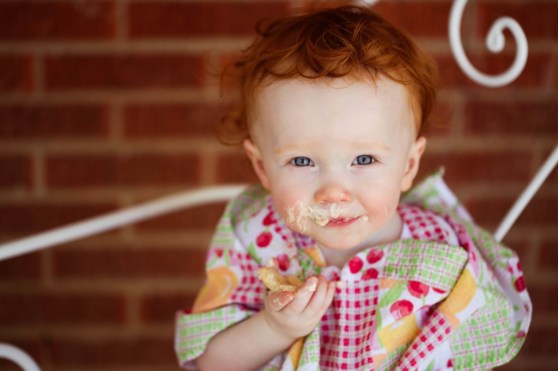
I fulfilled a little dream, today.  I baked with my daughter.  And she even wore a mini-apron. In just a few more months, she’ll be able to stand beside me on her stool and really help.  Today, she got to sit on the counter, play with the rolling pin, say, “row, row, row” as she rolled the dough and even properly sneaked little bites of the raw dough to eat.  This girl knows how to live.  And I’m so happy that she’s teaching me how to live mine, all over again.

image_1 photo

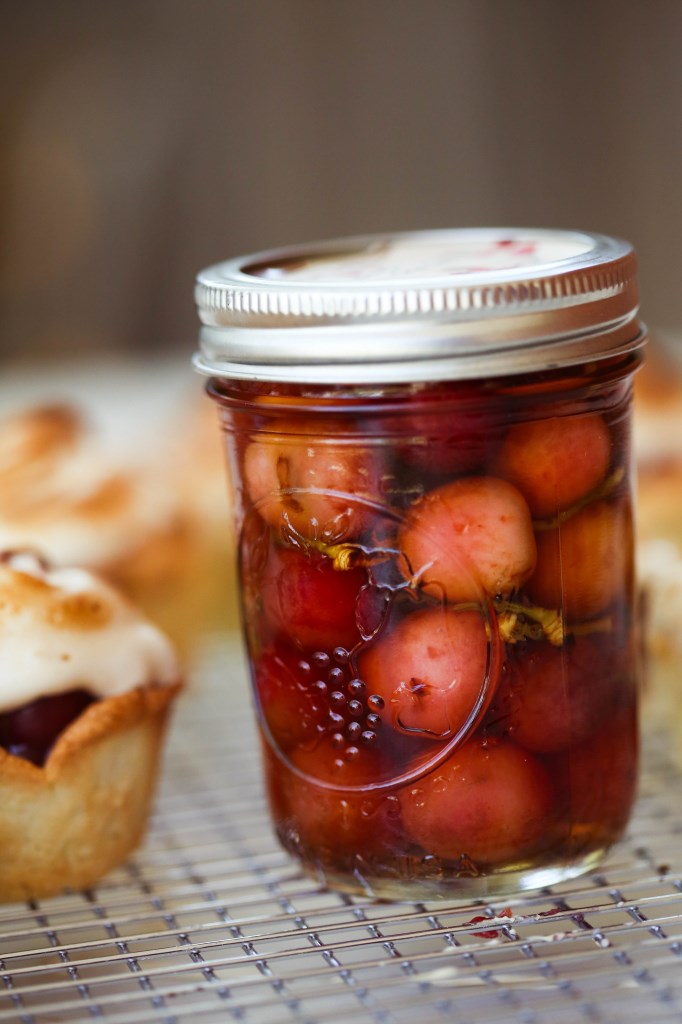
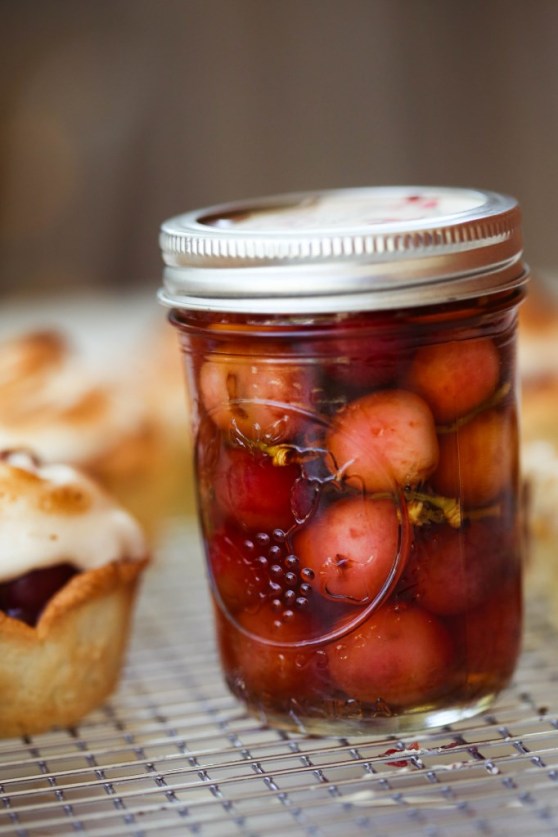
I found cherries on sale for $2.97, regularly over $7!  Cherries are in season in May, so I really hope they stay cheap for a few more weeks!  I did a couple things with my purchase.  First, I put a few whole in a jar and covered them with bourbon.
cherry meringue mini pies-20

A great addition to cocktails in a few weeks, I’m sure!  Or a grown up ice cream Sunday.  Or, a merciful substitution for those horrid Maraschino circles of candy that call themselves cherries.

cherry meringue mini pies-19

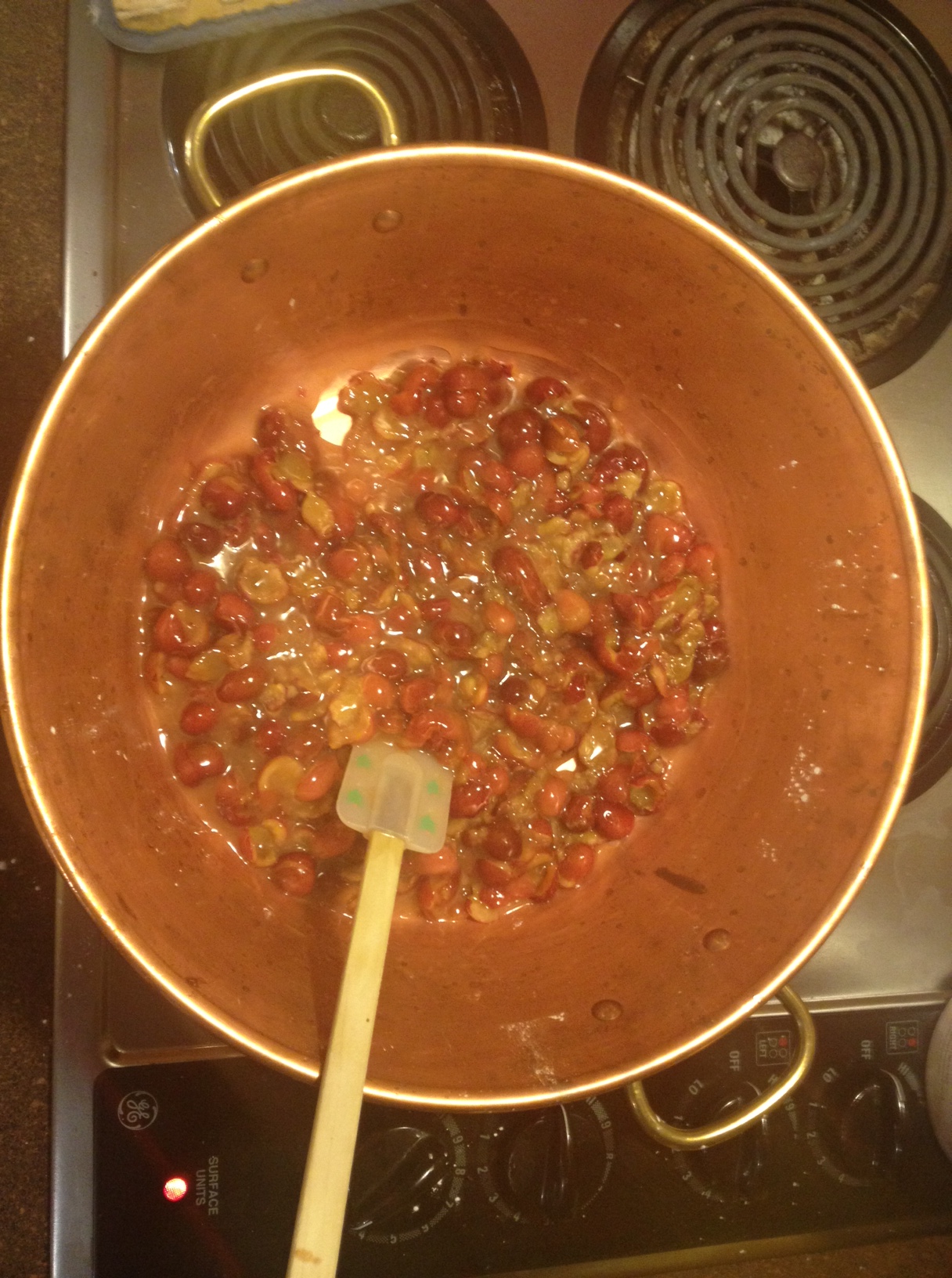
For my second act, I overcooked a batch of cherry pie filling so much that it resembled bits of dried cherries, resting comfortably in glue.  (I’d left it on the stove to “simmer” while I went to see my friend in the hospital.  Um, don’t ask why I did that.)  Matt rescued my near-break down by going and getting me another pound at 10:00 last night, then helped me pit every last one of them so I could start over.  That’s true love.

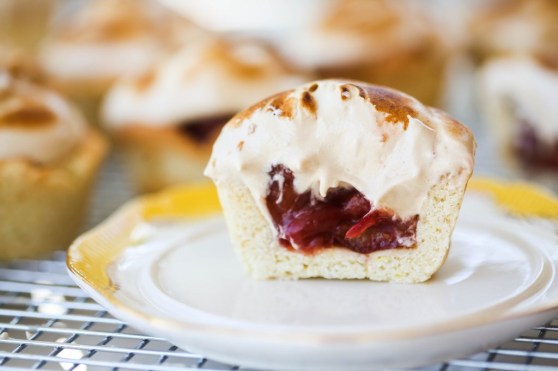
So I had a vague vision of what I wanted to do.  I wanted to make mini pies, fill them with tart cherry filling and use a brown sugar meringue that I’ve used before and wanted to make again because it’s close to perfection and is SO SWEET that it can really only be paired with something tart.  So these little devils are a combination of three recipes: Martha Stewart’s hand pie dough, My Baking Addiction’s cherry pie filling and Cindy Pawlcyn’s brown sugar meringue that she uses on her mile high lemon meringue pie at her amazing restaurant, Mustards Grill in Napa Valley (we went! we ate! we went into a food coma!)

The results were pretty great.  I think next time, I’d use my tried and true pie crust recipe and just add lemon zest to it.  Other than that, this recipe is a winner!  Especially for this super hot weekend that reminds us all too well that we live in the desert and it is officially summer.
cherry meringue mini pies-1

Mini Cherry Pies with Brown Sugar Meringue
makes two dozen

For the Crust

3 cups AP flour
1/4 tsp baking soda
1 tsp baking powder
1/2 tsp salt
2 tsp lemon zest (this microplane works best!)
1 stick of butter (1/2 cup, room temp)
1 cup sugar
1 large egg
3 oz. cream cheese at room temp
2 tbs buttermilk
1 tsp vanilla extract

In a medium bowl, whisk together the flour, baking soda, baking powder, salt and zest.

With an electric mixer on high speed (I used my stand mixer with the paddle attachment), beat butter and sugar until pale and fluffy, about 5 minutes.  Add the egg and beat until just combined.  Add cream cheese, buttermilk, and vanilla; beat until well combined.  Add reserved flour mixture, and beat until smooth.  Form dough into a ball and cover with plastic wrap and flatten into a disc.  Refrigerate 1 hour, up to overnight or freeze up to 1 month.

Let the dough come up to room temp and then roll out into a circle about 1/4 inch thick.  Cut out 4″ rounds and press them into a standard muffin tin, making sure to patch up any holes that form.  This dough is kind of crackly, so don’t fret.  It patches up pretty easily.  Prick the bottom of each pie with a fork and bake in a preheated 375 degree oven for 15 minutes, or until golden brown.  Some of the bottoms of the pies will puff up, but when they’ve cooled just press the puffed up centers down a bit before filling.  I wasn’t about to cut 24 parchment rounds and fill each cup with pie weights.  I’m not THAT dedicated to perfection.

For the Filling

5 to 6 cups fresh, pitted cherries
1/2 cup water
2 tbs lemon juice (fresh!)
2/3 cup sugar
4 tbs constarch
1/2 tsp almond extract

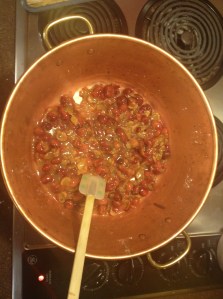
In a saucepan over medium heat, combine the cherries, water, lemon juice, sugar and cornstarch.  Bring to a boil; reduce heat to low and cook, stirring frequently, for about 10 minutes.  Stir in the almond extract and cool slightly before using.
image

I really love using my copper jam pot – (pardon the iPhone pic) The copper heats up almost instantly, as do the sides, so it cooks jam more evenly.  There are lovely, affordable ones here!

For the Meringue:

3/4 cup egg whites (about 6 large)
1/4 teaspoon cream of tartar
1 1/2 cups firmly packed brown sugar

Place the egg whites and cream of tartar in an electric mixer fitted with the whip attachment. Place the brown sugar in a medium, heavy saucepan with high sides (that sugar will boil up and scare the meringue right out of you if you have a small pan), add water to cover, attach a candy thermometer to the pan, and turn the heat on high. When the sugar is at about 240 degrees, start whipping the whites on high speed (they should be foamy and starting to thicken before you add the sugar). When the sugar is at the high soft-ball stage (245 degrees), remove the thermometer from the sugar and, with the mixer still running, carefully avoiding the whip, pour the sugar into the egg whites in a thin stream. When steam starts to come off the whites, add the sugar more quickly. When all sugar has been added, continue whipping until firm but soft peaks form.

Assemble!

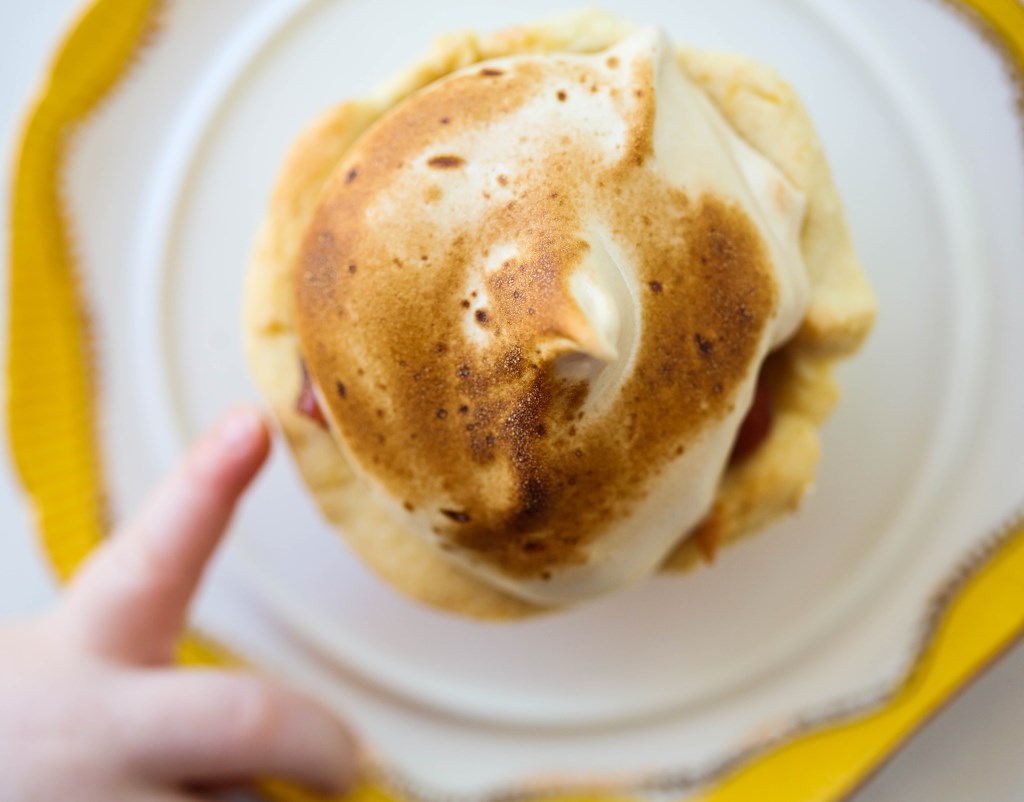
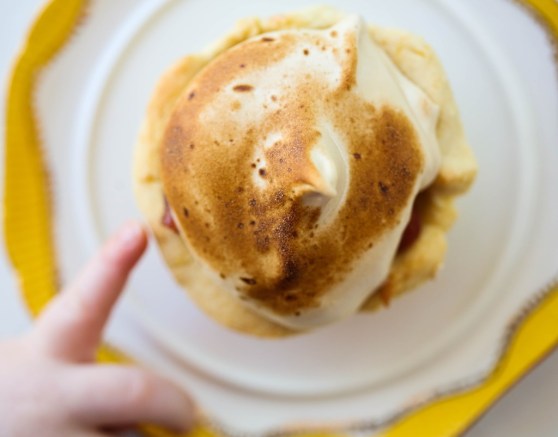
Fill each pie shell with the filling.  Then top each with a generous dollop of meringue (you’ll have leftover meringue) and then get a torch and torch those suckers.  I don’t like toasting meringue in my oven because I inevitably scorch them and that makes me feel like a failure and I try to avoid that feeling whenever possible.  It’s all about setting yourself up to succeed in the kitchen that will keep you coming back.

I think these are best served with iced coffee because that’s what you need on a 100 degree day like today!
cherry meringue mini pies-6


Little fingers are very curious 🙂


cherry meringue mini pies-8


cherry meringue mini pies-17


JOY!
Food Memories: Chicken n’ Noodles

food-7

Many of us have memories of being little and watching our moms or dads or grandmas cook or bake for the family.  The first memory that comes to mind for me is watching my mom cut out biscuits with an old green chili can she had cut the top and bottom off of (it’s the perfect biscuit size!) and then slap each side of the biscuit in vegetable oil, then slide the disc in line with the others to fill up an entire pizza pan.  There is something methodically calming about watching someone cook.  I always felt like I was helping, even if I never touched anything.  I felt involved, because mom let me stand there or sit on the counter across from her and talk to her while she worked.  I will always be thankful that she let me hang around the kitchen.  She was always so busy doing a thousand things for our family that it was the one moment when things were somewhat calm and we could just be together and I could count on it every night because I (thankfully) had a mom that cooked dinner 6 out of the 7 days of the week.  You really can’t replace that kind of experience with anything else.  Those memories stick.

My dear friend, Louise Shoemaker, shared a memory and a meal with me last week that seemed so fitting for my blog and for what I love about cooking for my family and eating together.  She is one of the best writers I know, (she was my 10th grade English teacher – how lucky I am to still be friends with her!) so I asked her to write a little blurb about the recipe and the memory that went along with it.  My favorite part about this recipe was consulting her every 5 minutes to make sure I was doing things right.  She had driven up to Lubbock for the day and ate this meal with us!  I’d never made noodles from scratch, and technically, neither had she, but she’d watched her mother so much that she knew.  Here is what she had to say about the chicken noodle soup that made a permanent home in her memory:

RGBBounce
L
ouise and her Mother

It’s funny that a food memory starts with a sharp, clear visual. The bright yellow Pyrex bowl and the red-handled Daisy egg beater swirling the rich gold of fresh yolks. I’ll never forget the 50’s color scheme of the kitchen: pink walls, turquoise cabinet doors, chocolate brown trim. I can still see the white enamel-on-steel kitchen table and my mom in her long, slim dress with the apron tied smartly and the scarf pulled back over her careful bobby-pin curls. It’s as clear in my eye today as it was in those days 50-some years ago.

It must have been a Wednesday. Two days until payday and five mouths to feed on a budget stretched to the last nickel. So, a plump (cheap!) boiling hen, a dozen eggs, a pile of flour, a splash of water, and we knew we’d make it till Friday.

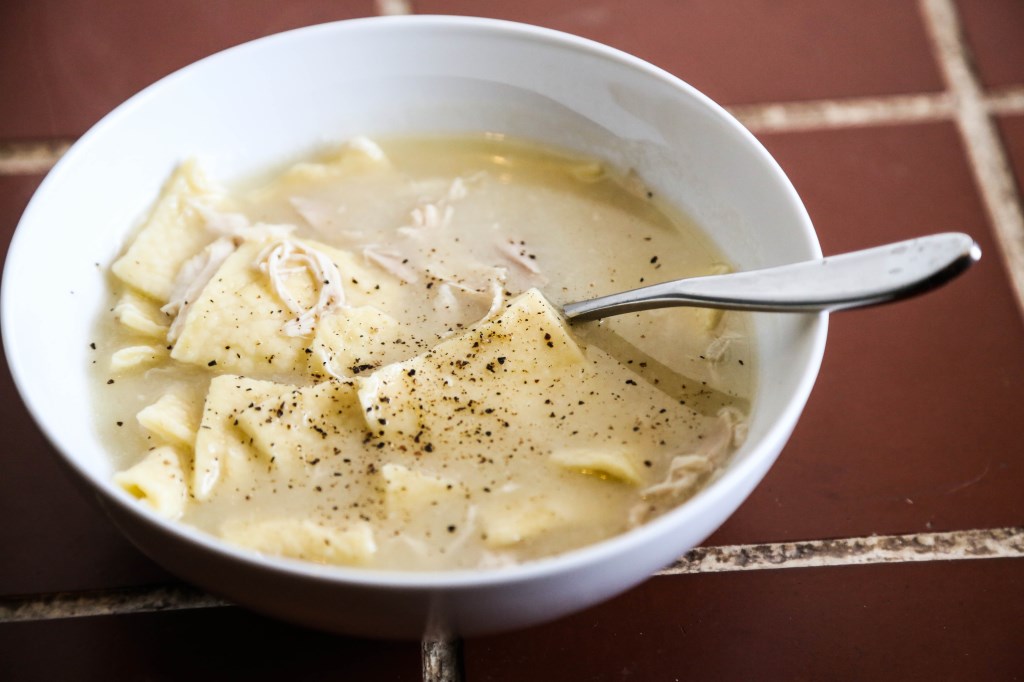
Chicken’n Noodles: made-from-scratch pasta boiled in rich, fresh stock, with chunks of chicken so tender it fell off the bone. A silky thickened sauce, glistening with a bit of butter, and thick, rustic slabs of slightly chewy noodles curling on a plate. YUMM!

The aroma of that meal is the smell of childhood, and it takes me right back there to that kitchen watching my mom pour the beaten eggs into the crater of the flour volcano and mix and knead and roll the dough out to a four-foot circle. I can see her boning a mountain of chicken, dropping heaping handfuls of raw noodles into bubbling broth. Cooking this meal was a production, an infrequent event. I’ve savored the memory of Chicken and Noodles for decades. It was amazing to re-create it with Alisa. And Olive.

I like to think of them cooking together for years to come, Olive sharing with her mother an experience so rich and elemental and, in today’s environment, rare. You’re a lucky (impossibly adorable) munchkin, Ollie! And your mama is pretty awesome, too!

food-6

I am giving you the recipe I did – I only added a few things to the stock, the rest, I followed Louise’s mom’s story-like recipe as best I could.  With pointers from Louise along the way…

Chicken’n Noodles

For the stock:
1 chicken, cut into pieces (8 pieces, bone still in: wings, breasts, legs, thighs)
Water
Salt
1 onion, chopped into quarters
3 carrots, chopped into thirds
2 bay leaves
3 sprigs of thyme

Put the chicken pieces into a large stock pot and cover with water until covered by about 2 inches.  Add a couple tablespoons of salt along with the onion, carrot, bay leaves and thyme.  Bring to a boil, skimming any foam off the top as it comes.  Reduce to a simmer and maintain a simmer (I left my burner on about a 3-4) for 1 and a half to 2 hours.
Remove the chicken from the pan and let it cool.  Then, remove skin, bones and any fat that remains.  Chop or hand-shred the chicken and set aside in a bowl in the fridge while you make the noodles.  Skim the stock of as much fat as you can, but don’t fuss too much.  Remove the carrots, onion and herbs and discard so you’re left with a (mostly) clear broth.  Keep the broth at a simmer with the lid on while you make the noodles.

For the noodles:

3 eggs
a big ol’ mound of flour (maybe 4-6  cups)
salt
elbow grease

Pour a mound of flour on a clean work space and create a hole in the center, volcano-style.  Make it deep enough so that when added, the eggs don’t spill over the side. Leave flour on the floor of the volcano so you can’t see your counter.  Crack the eggs into the hole and with your hand or a fork, whip up the eggs, incorporating flour as you go from the sides.  You won’t use all the flour, of course.  Keep incorporating flour to the eggs, stirring all the while, until you are left with a ball of dough that isn’t very sticky anymore.  Knead the ball for a good 10 minutes until you’re left with a very smooth ball of dough.  Trade off with a friend if you get tired:

food-1 food-2

Clean your hands and insert your finger into the center of the dough.  If it comes back super sticky, add more flour and knead some more.  Cover your dough with a towel and let it rest for 10 minutes.

food-3

Clean off your work space and if you’ve worked clean, you can save most of the flour you didn’t use.

Roll out the dough on a lightly floured surface till it’s an 1/8th of an inch thin.  Or thinner.  You may need to let the dough rest a few times throughout this process because it will start to shrink back up.  Once you get it thin enough, cut it into whatever shapes you like.  I chose squares because I have a kiddo that needs everything cut up, anyway.  Louise remembers her mom cutting looooooooong, thick strips, which would be wonderful, too.  You could even get cute and cut out little shapes from tiny cookie cutters.  Once you get all the dough cut, make sure each piece is coated in flour and bring at least a cup more flour with you to the stove to boil and put this dish together.

Making it Into Soup:

Get your stock to a rolling boil.  Dump your noodles in a handful at a time until they’re all in the pot, stirring as you go so they don’t stick.  This is the vague portion of our program.  Once the noodles are al dente, add the chicken back in and bring it back up to a simmer over medium-low heat.  While stirring, add a sprinkling of flour – maybe 1/4 cup – and stir until fully incorporated.  Keep adding flour till a good consistency is reached.  You’re wanting an opaque sauce that’s neither soupy nor gravy – somewhere in the middle.  If it coats the back of a spoon, it’s probably ready.  Adjust the seasoning with salt until it sings of chicken goodness.  Ladle up, top with a good sprinkle of freshly ground black pepper and enjoy.  We had ours with a wonderful Chardonnay and some crusty challah bread with butter.  Really – it does NOT get better than that.  The baby went crazy for this soup, too, and ate her entire bowl, plus some of ours.

food-5

food-4