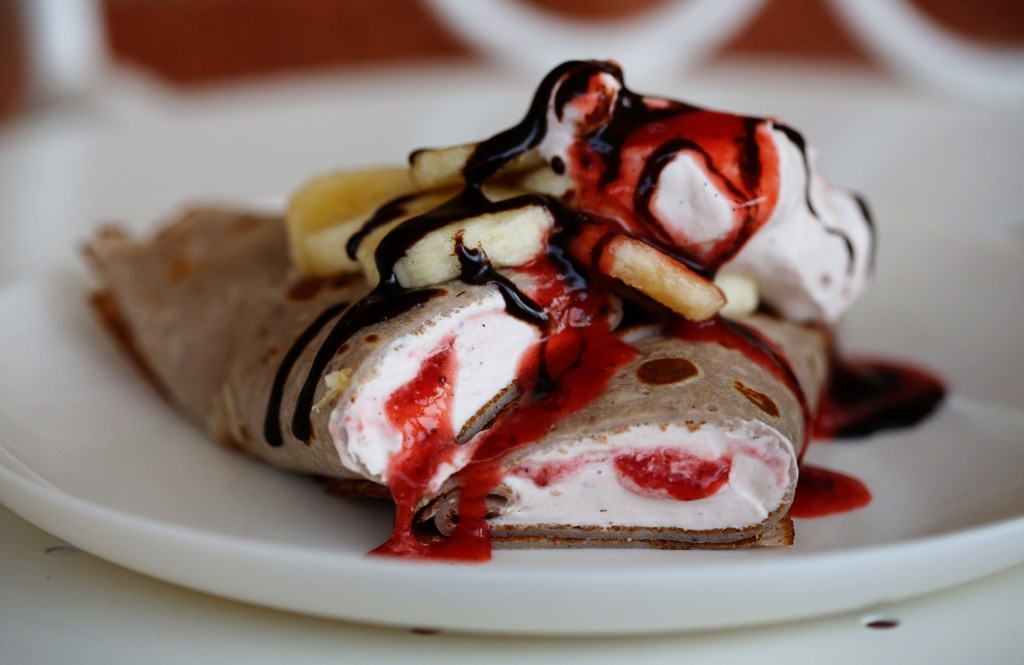
Strawberry Banana Split Crepes

crepes

I’ve posted a lot of recipes lately that have strawberries, but there is a good reason – they’re in season!  When you’re at the store and strawberries are $1.30 for a pound, instead of $4 – that’s your sign that they are in season!  Now, I’m not kidding myself into believing that they aren’t grown in hot houses, BUT at least it’s the season for them, and in my mind, that makes me feel like they taste better.

I wanted to make a strawberry crepe, so I looked up a simple crepe recipe, and where it called for 1/2 cup of water, I added a 1/2 cup of strawberry puree instead, plus a bit more water to thin it out.  My strawberry puree was made-up, too, as was the strawberry-vanilla bean whipped cream!

You need to make your crepe batter the night before you use it, so make this batter tonight and have crepes in the morning while the weekend is still here!  This recipe looks like a sugar bomb, but it actually wasn’t.  The crepes have zero sugar except the strawberry puree, which only has 3 tbs and it’s also used to sweeten the whipped cream. So if you don’t add the chocolate sauce, this is really low sugar!  And it definitely doesn’t taste like you held back!

bsplit crepes

Strawberry Crepes

3/4 cup whole milk
1 cup flour
2 eggs
1/2 cup strawberry puree (recipe follows)
2 tbs water
3 tbs melted butter

Put all the ingredients into a bowl or a large, tall cup and with your immersion blender, blend for 15-20 seconds until fully mixed.  If you don’t have an immersion blender, use a regular blender for the same time.  Transfer to a container and chill for one hour, up to 48 hours (I just did this step before I went to bed and used it the next morning.)

In a 10″ non-stick, shallow skillet, heat teaspoon of butter over medium high heat, or just spray with non stick spray, but you want your pan to be pretty hot.  Add a quarter cup of batter to the pan and swirl around till it’s spread as thin as possible. THE FIRST CREPE IS ALWAYS CRAP.  Just throw it away.  Now, you’re ready to begin.  By 1/4 cup scoops, (I used a ladle) swirl your batter in the pan very quickly and let it set for at least 1 to 2 minutes before flipping.  If your pan is hotter than mine, you may need to alter your time.  With a wide spatula (I used a fish spatula), slide under the crepe and flip over.  The other side won’t take as long to cook.  Keep finished crepes covered in a towel so they will stay warm and pliable.  This batter made about 8-10 crepes for me, but if you’re really skilled at swirling your batter, you could squeeze 15 crepes out of this amount.  I am not skilled and my crepes are always thicker than they should be, but they’re still delicious!

Fill the crepe with sliced bananas, a drizzle of left over strawberry puree, and a dollop of whipped cream.  Add more strawberries and whipped cream on top, and if you’re feeling the entire banana split thing, drizzle in chocolate syrup (I used Torani chocolate syrup.)  Or even some toasted pecans!  Have fun – it’s the weekend!

Strawberry Puree

1 lb of fresh strawberries, hulled and halved
3 tbs sugar
1 vanilla bean, split and scraped of its seeds. If you don’t have a vanilla bean, wait, and add some vanilla paste or vanilla extract later when you’re blending)
1/4 cup water

Place all the ingredients into a medium saucepan and cook over medium low heat till bubbly.  Cook for about 15 minutes until the strawberries begin to break down.  Remove the vanilla bean and transfer to a blender or a tall cup with your immersion blender and blend, with an extra 1/2 cup of water till fully blended and no chunks remain.  Add the vanilla bean paste or vanilla extract (about 1 tsp) if you want and blend again.

Strawberry Vanilla Bean Whipped Cream

1 cup heavy cream
1 tsp vanilla bean paste
1/4 cup strawberry puree

Place all ingredients into a bowl and whip until soft peaks form.  (I used my immersion blender, duh)

Freezer Staple – frozen shrimp

7G9A1631

This could be considered the first post of many where I will talk about the joys of a well stocked kitchen/pantry.  There are a few things shown in the pic above that should be in every well-stocked kitchen.

1. Rice.  I keep several types of rice on hand: Basmati (so flavorful for Indian and Thai dishes) Brown, Sweet (sticky rice for Asian desserts), Long Grain and White short grain.  It’s easy to store, it’s cheap (usually no more than $2 per pound) and in a pinch, you have an instant side dish.

2. Onions/Leeks/Shallots – Don’t keep these in the fridge.  DO keep them in a dry, dark place in your kitchen, separate from other fruits and vegetables.  I don’t always have leeks on hand, but I DO always have onions and shallots.  When I’m at the grocery store, whether I have a recipe in mind or not, I assume that I will need onions.  I usually buy medium sized, sweet yellow or Spanish onions.  I would guess that 9 out of 10 recipes I make include onions in some form.  Okay, maybe 10 out of 10.

3. Frozen Shrimp.  Kind of the wild card that you might not think of, but in the frozen section, usually near the meat department in both grocery stores and big chain stores (walmart, target, etc).  They come in a few options: raw with shell, raw, shelled and deveined or cooked.  Get the raw, shelled, deveined.  You don’t want to have to fuss with peeling shrimp and you definitely don’t want to mess with removing the poop chute.  You may not think that you’ll use shrimp often enough to always buy a bag when you’re buying other frozen items, but you’d be surprised.  Shrimp tacos, shrimp lettuce wraps, shrimp stir-fry, or coconut shrimp and rice…

Coconut Shrimp with Basmati Rice*
serves 4

1 tbs butter
1tbs extra virgin olive oil
1 large leek (about a cup, white and pale green parts only – halved lengthwise, rinsed and sliced thin)
4 scallions (white and some green tops, sliced and save some for a rice garnish)
2 garlic cloves, minced
1 1/2 pounds large shrimp
1 tsp curry powder
salt and pepper to taste
1/4 cup dry white wine or chicken broth
1 cup coconut milk
2 tbs fresh cilantro, chopped
1 cup of dry Basmati rice, cooked to package instructions

Melt the butter with the olive oil in a large skillet over medium heat.  Add the leek, scallion strips, and garlic and cook, stirring, until the leek starts to wilt, about 2 minutes.  Add the shrimp, curry powder, and salt and pepper and cook, stirring, until the shrimp turn pink, about 2 minutes.  Add the wine or chicken broth and cook, stirring, until the liquid is reduced by half-about one minute.  Add the coconut milk and simmer until the shrimp are opaque throughout, about 2 minutes.  Remove from the heat, add the cilantro, and let stand, covered, for about 10 minutes to meld the flavors.

Serve on top of rice, garnished with extra scallion and cilantro, if desired.

7G9A1636

*recipe adapted from the Bonne Femme Cookbook

Strawberries in Balsamic Caramel – Rethinking desserts

7G9A1673

Since Olive started eating from the table, I’ve been 10x more mindful of what I serve for lunch and dinner.  I have re-thought the structure of a meal from the way we sit at the table to the kinds of  things we have for dessert.  Dessert is certainly not something that I grew up eating every night.  I’m not sure any of us did.  I think there are a couple reasons for this.  For one, American versions of desserts are really sweet and really indulgent, for the most part.  And usually really big.  So naturally, we don’t think of desserts as something you should have every night, which is inherently a good thing, but it’s caused us to view things like fruits in nearly the same category as vegetables: something we HAVE to eat, or are too expensive to eat, or aren’t very exciting to eat.  I think most people would feel slightly jipped if someone suggested strawberries for a dessert out at a restaurant.  Strawberries?  That’s it?  Where’s the colossal strawberry cheesecake with the dulce de leche syrup and giant mount of whipped cream?

You see the problem.  Besides dark chocolate, fruit has been the only sweet Olive has consumed on a regular basis.  She’s geared to think fruits are the sweetest things in the world.  Her favorite sweet is a banana. A friend of ours from Mexico City once said in the most endearing, non-native to America-way, “What could be sweeter than a banana?!”  That statement struck me because I instantly thought of a myriad of things we eat on a daily basis that are, in fact, much sweeter than a banana and have loads more sugar (cereal, fruit snacks, bottled juice, packaged cookies, even sweetened yogurts can have up to 21 grams of sugar per serving).  So I want to retrain my mind to accept fruits as a dessert by themselves.  And the types of colossal sugar bombs we typically think of as desserts, I want to think of as rare treats, instead of the normal dessert option.  This is a challenge for me.  I feel cheated when I get that sugar craving in the afternoon and the only thing in my house is either fruit or dark chocolate and what I really want is a piece of cake or a brownie or something reserved for a feastal weekend meal instead of a boring ol’ Monday afternoon.  It’s hard to have discipline with dessert, but I feel that if it can be accomplished, a natural limit on sugar will take place in my life and a greater joy will be present when I do indulge in the Super Desserts that all good blog posts are made of.

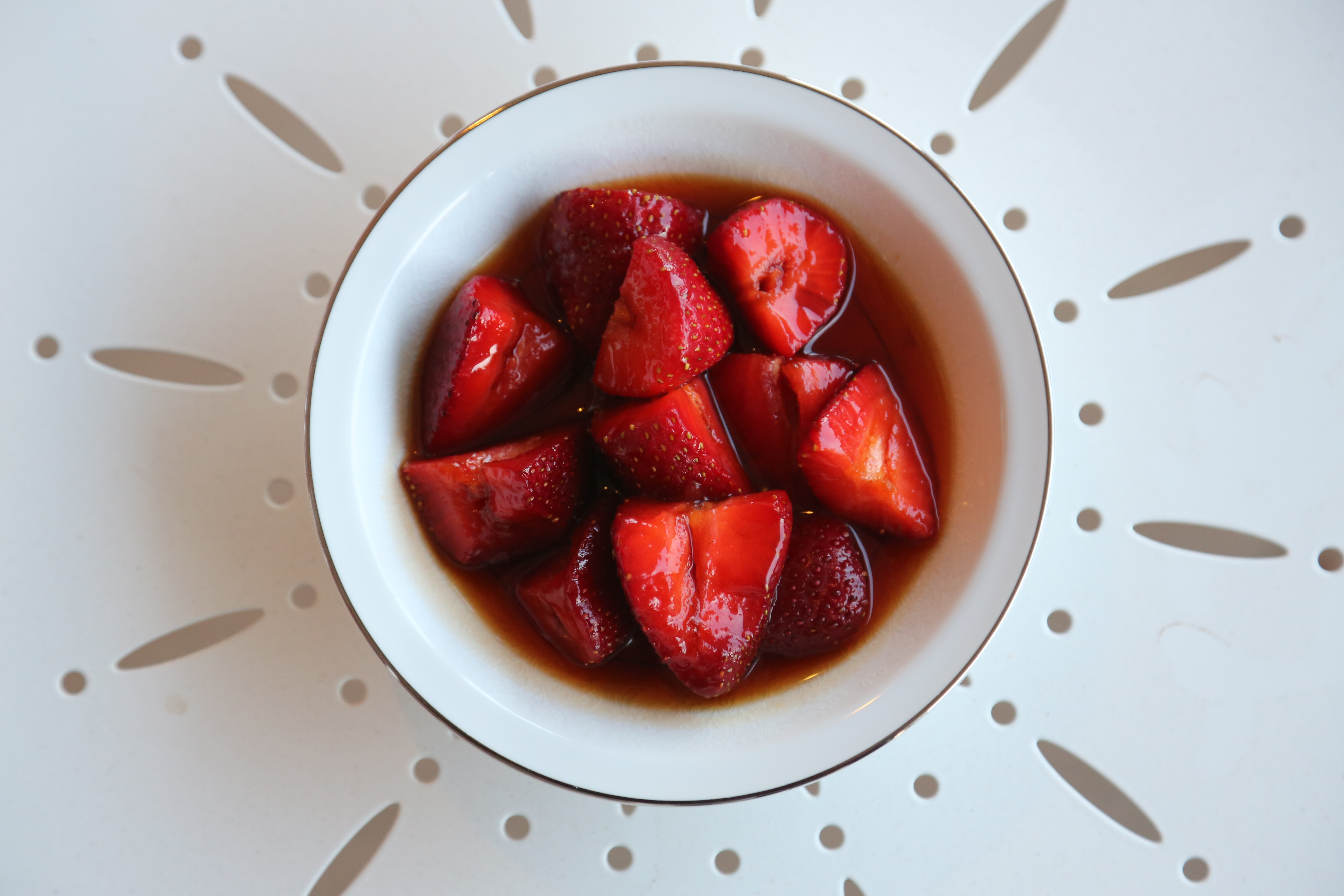
For today, simple strawberries-coated in a balsamic caramel sauce.  Simple, incredibly flavorful and a wonderful way to liven up your tastebuds at the end of the meal.  When I made this last week, we were out on the front porch and Olive was walking in circles around the bushes and each time she passed me, she got this giggly fit and opened her mouth for another bite.  Like a little, tasty game.  Food is fun and sharing food is even better.  Remember that this week as you prepare meals for your family!

Strawberries in Vinegar*

serves 6

1.5 lbs medium sized strawberries, hulled and halved lengthwise
3/4 cup sugar (I know, I just talked about sugar bombs.  However, this is making a caramel and coating the strawberries.  You don’t consume all the glaze!)
1/3 cup red wine vinegar
1/4 cup boiling water

Put the sugar into a wide saucepan and place the pan over low to medium heat.  You will start to see darker patches of caramel starting to appear.  Stir to make an even, dark caramel.  Carefully pour in the boiling water using a metal ladle.  The caramel will bubble dramatically, so be careful to not get too close.  Let the caramel cool a bit before pouring in the vinegar because boiling vinegar will singe your nostril hairs right off.
Pour in the vinegar and mix well.  Cool the caramel in the fridge for at least 20 minutes.  It will become thick.
Put the strawberries into a bowl, then pour over the vinegar caramel.  Marinate in the fridge for one hour before serving.
These are wonderful, eaten with a simple glass of rose.  However, if you wanted to make a more indulgent dessert, I think these would be killer on a strawberry shortcake with homemade vanilla bean whipped cream.  Mmmmmm…

7G9A1675

*recipe adapted from Ferran Adria’s book, titled (not coincidentally) The Family Meal.  🙂 This book was an inspiration for the title of my blog because I really couldn’t think of a better way to title it.  His book is filled with the recipes his staff would share together before dinner service at elBulli in northern Spain (formerly the best restaurant in the world, which is now, sadly closed).  I’d highly recommend this incredibly simple, straight-forward book and its wonderful layout with pictures of each step of the cooking process.

Corn Cookies

momofuku corn cookies

momofuku corn cookies 3

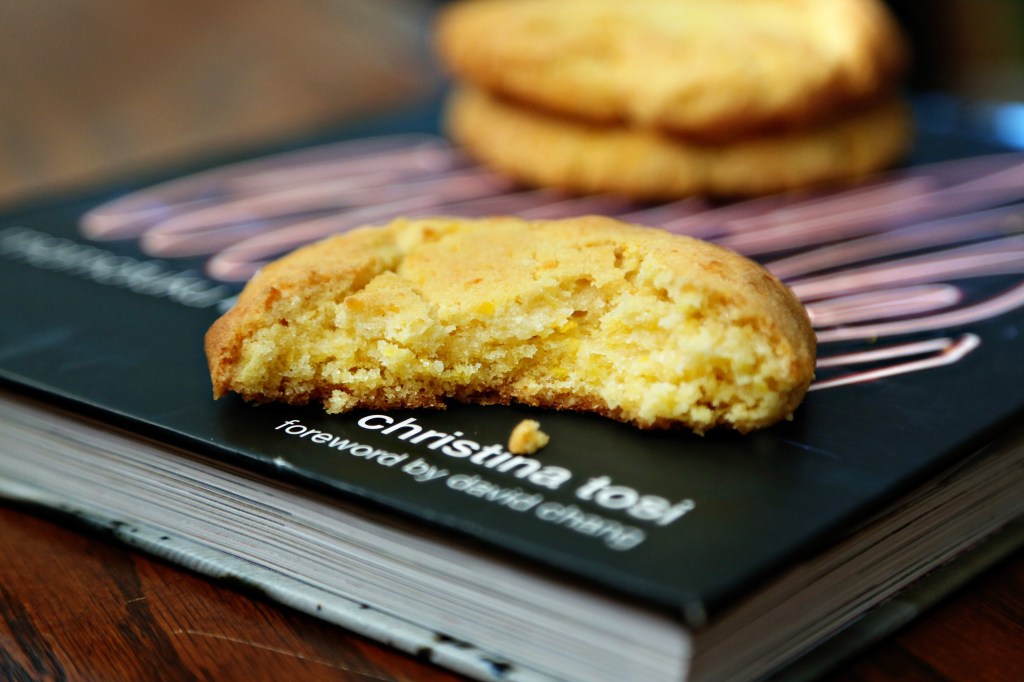
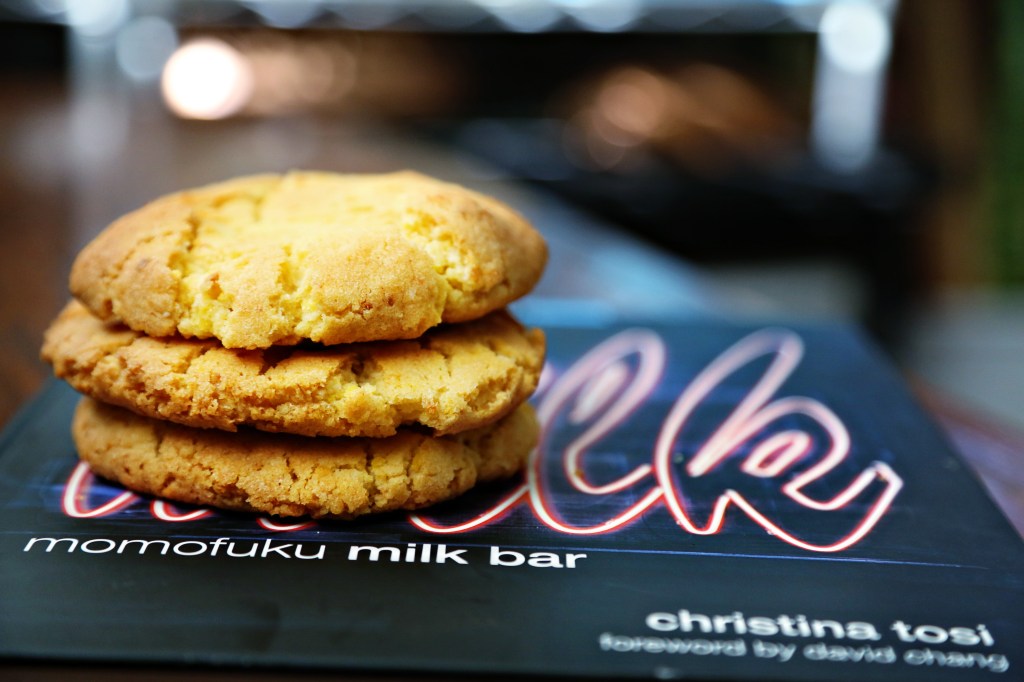
This is one of the best cookies I’ve ever had in my entire life.  Crispy on the outside, chewy and soft in the middle.  Sweet, salty, and incredibly buttery.  It uses a mystery ingredient: corn powder. All you do (and believe me, slackers, this ingredient is worth whatever effort you don’t want to put forth) is buy a bag of freeze dried corn off Amazon and pulse it in your blender or food processor till it looks like powder.  Then, you’ll have enough for a few batches of these amazing cookies.  The corn powder adds to the incredible butter flavor and if you don’t tell anyone, they won’t be able to pick out the secret ingredient.  They’ll just sit and marvel that they are enjoying the greatest cookie (that doesn’t include chocolate) of their life.

This recipe is from the wonderful Momofuku Milk Bar cookbook.  Matt made Olive’s first birth-day (made it when we came home from the hospital with her) cake from this book, my birthday cake and the Crack Pie that we’ve made a few times and won a smallish award (in a contest created by us) for best non-fruit pie at our Pie Bake-Off.  Christina Tosi is undoubtedly a genius, as Momofuku  Milk Bar’s creative pastry chef.  It’s only her hummingbird-like brain that could come up with such nostalgic, creative, sugar-rush kind of desserts.  She is a child at heart, which shows so evidently throughout this cookbook.

Word of caution: if you like to get in and out of the kitchen quick, this book isn’t for you.  (the cookies were easy enough but the rest…) My birthday cake had Matt in the kitchen for two days and involved around 5 different recipes for one cake alone.  However, it was the best cake ever.  I don’t need to reiterate that good things are worth the hard work, but I will.  To quote Bob Kelso, “Nothing in this world worth having comes easy.”

And every recipe from Momofuku Milk Bar is worth having.

momofuku corn cookies 2

Corn Cookies
yield: 13-15 cookies

*225 g butter, at room temp (2 sticks)
300 g sugar (1.5 cups)
1 egg
225 g flour (1 1/3 cups)
45 g corn flour (1/4 cup – if you don’t have corn flour, which I didn’t, mix 1/4 flour and 4 tsp corn powder)
65 g freeze dried corn powder (2/3 cup)
3 g baking powder (3/4 tsp
1.5 g baking soda (1/4 tsp)
6 g kosher salt (1.5 tsp)

1. Combine the butter and sugar in the bowl of a stand mixer fitted with the paddle attachment and cream together on medium for 2 to 3 minutes.  Scrape down the sides of the bowl, add the egg, and beat for 7 to 8 minutes (this is important.  This long mixing process is what gives the cookies their amazing texture)

2. Reduce the mixer speed to low and add the flour, corn flour, corn powder, baking powder, baking soda, and salt.  Mix just until the dough comes together, no longer than 1 minutes.  Scrape down the sides of the bowl.

3. Using a 1/3 cup measuring scoop, portion out the dough onto a parchment-lined sheet pan.  Pat the tops of the cookie dough domes flat.  Wrap the sheet pan tightly in plastic wrap and refrigerate for at least one hour.  Do NOT baking your cookies from room temp – they WILL NOT bake properly.

4. Heat oven to 350F.

5. Arrange the chilled dough a minimum of 4 inches apart on parchment or silpat-lined sheet pans.  Bake for 18 minutes (Mine looked perfect in exactly 18 min. They know their stuff) The cookies will puff, crackle, and spread.  After 18 minutes, they should be faintly browned on the edges yet still bright yellow in the center; give them an extra minute if not.

6. Cool the cookies completely ON the sheet pans before transferring to a plate or your mouth (yeah right, you know you’ll eat a warm one and you SHOULD).  At room temp, the cookies will keep fresh in an air-tight container for 5 days.  But I really doubt they’ll last that long.

*I think measuring your flour, corn flour and corn powder by weight is really important.  Reason:  I first did it by volume and measured out 1 1/3 cups.  Then, to double check, I weighed the flour I’d measured and it was only something like 210 grams.  That’s enough of a difference to matter in the final result.  Just FYI!

momofuku corn cookies 5

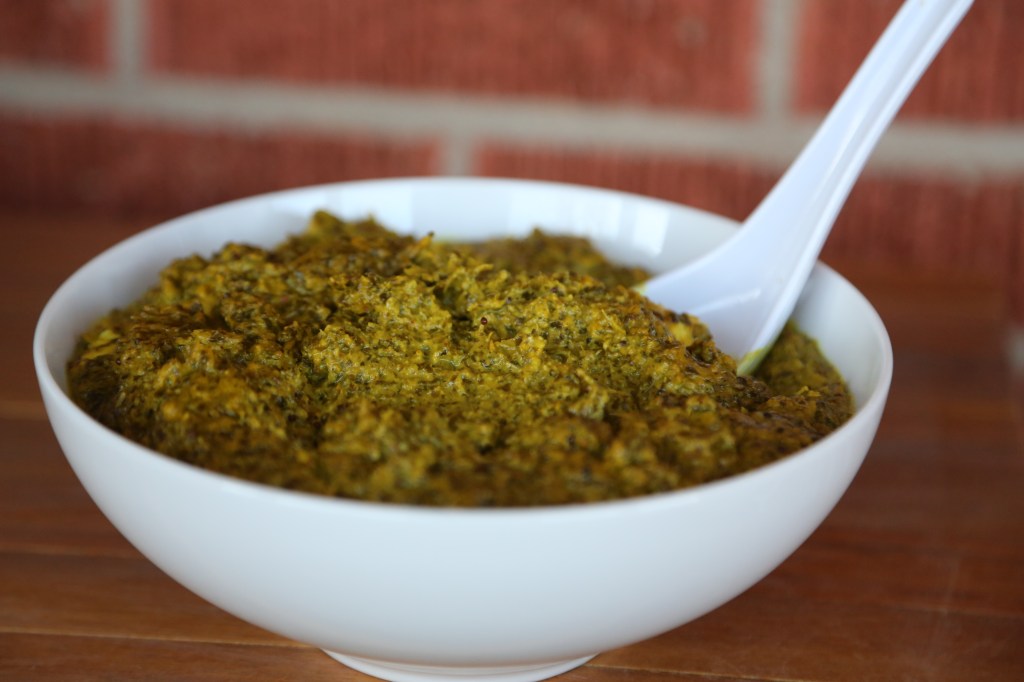
Kale Paneer

7G9A1648

I received several requests for kale recipes when I asked a couple weeks ago for ideas for this blog.  I wanted to do something a little more challenging or interesting than the typical things you see for kale in the sea of Pinterest such as kale chips, kale salads, wilted kale, etc.  Basically, all the things you could use spinach for, if you were less ambitious.  I’m still not altogether familiar with kale’s flavor profile, but after turning a big bunch of it into creamy, soul-satisfying Indian food, I’m dedicated to finding ways to use this super food.

One of our favorite things to order at our local Indian restaurant is spinach paneer.  Creamy spinach with warm cubes of Indian cheese that doesn’t melt, but spreads wonderfully on a piece of garlic naan.  Truly a comfort food.  I saw this recipe for kale paneer and so I decided to try it for myself.  This girl calls for making a cream by boiling a cup of cashews soaked in hot water.  That sounded like a vegan move and I didn’t really want to buy a cup of cashews (hello, expensive) so I just subbed in  heavy cream, which I always seem to have on hand, and it turned out wonderful.  I also decided after tasting it that the cashews would have added a certain sweetness, so I added in two tablespoons of brown sugar and it was the right move – just enough sweetness to offset the bitterness of the kale and all the spices and it mellowed everything out really well.

For all of you who were wishing I’d do something a little more healthy with kale, like I said; there’s always next time.  But especially on this snowy day (wha?!) I think this recipe fits the bill.  If you lack the myriad of spices this recipe calls for, (I had them all! Proud moment) don’t waste your money at a regular grocery store.  Please go to Ghandi Bazar if you live in Lubbock, (or come to my house; seriously) and if you live elsewhere, I’m sure you can find an Indian market on some back street in your own town.  They know their spices and they’re cheaper than you’d EVER find at a chain grocery store.  Oh, and I didn’t go to Ghandi Bazar to find the paneer.  I was at United and looked up that Queso Blanco (or queso fresco) is very similar to paneer as it won’t melt and has very similar flavors.  It turned out great and got better with each day!

Kale Paneer*
1 medium yellow onion
2 – 3 Garlic Cloves
1 tbsp Minced Ginger
1 tbsp Sunflower or Canola oil
1 1/2 tsp Turmeric
1 1/2 tsp Ground Cumin
1 tsp Black Mustard Seeds
1 tsp Cumin Seeds
1/2 tsp Ground Coriander
1/2 tsp Garam Masala
1/4 – 1/2 tsp Ground Indian Chili Powder OR Cayenne (depending on how spicy you want it to be)
6 cups Chopped Curly Green Kale, packed
1 cup Plain Yogurt
1/4 cup heavy cream
2 tbs brown sugar
8 oz Paneer* OR Queso Blanco
Salt, to taste

Roughly chop the onion, garlic, and ginger. Heat a large pot over low-medium heat, add oil, then the onion, garlic, and ginger. Saute over low-medium heat until the onions begin to brown, at least 5 minutes. Once browned, add all of the spices and saute for another 1 or 2 minutes.
Add the chopped kale to the pot and saute until bright green.
Add the heavy cream to the kale mixture along with the yogurt and brown sugar, and stir in. Begin pureeing the curry with an immersion blender (or in batches in the regular blender) until smooth and no lumps remain, then transfer to a large bowl.
Once the entire curry has been pureed continue to cook over low heat, stirring occasionally.
Slice the cheese into small cubes and add to the simmering curry. Keep cooking, uncovered, stirring occasionally, until the curry thickens. If you prefer a thinner sauce, or you find the curry has gotten too thick, just add more water until it reaches your desired consistency. Season with salt, to taste, and more brown sugar, if necessary.

*recipe adapted from the adorable blog, Noms for the Poor (what a great name)

Homemade Goat Cheese

pure goat cheese

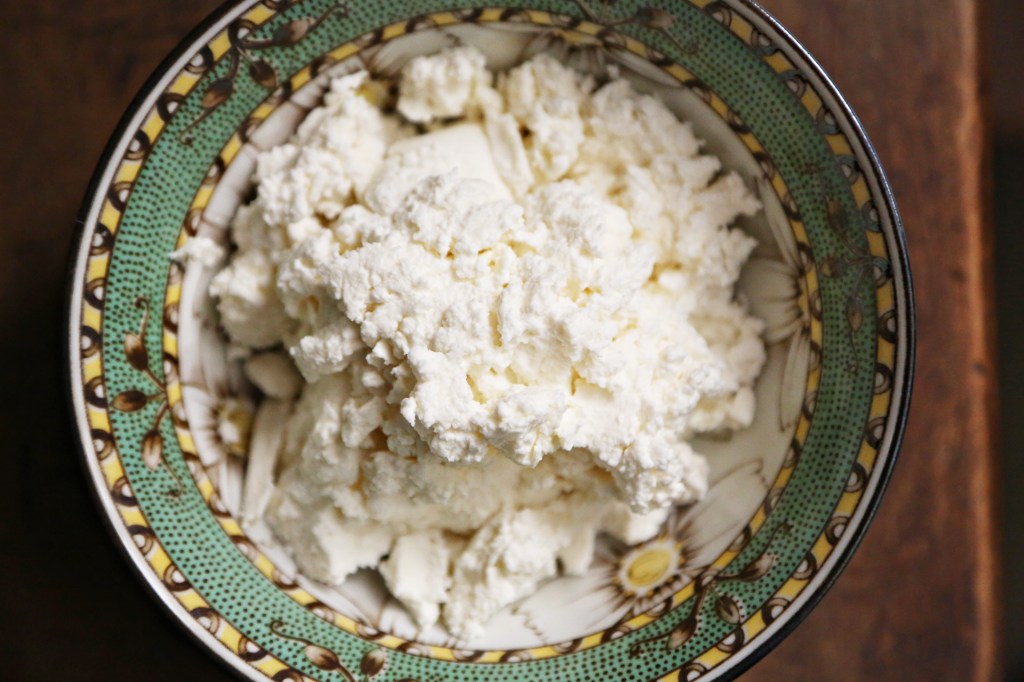
Good Monday Morning to you all!  I’ve been meaning to blog about homemade goat cheese for several weeks, now.  I stumbled upon this process because I’d bought a quart of goat’s milk when Olive was starting to wean and I read or heard or saw somewhere that goat’s milk digests easier than cow’s milk, so I figured I’d give it a shot.  I naturally tasted it before I gave it to her.  It tasted like liquid goat cheese.  I wouldn’t personally want to drink that, but I let her try it in the name of not pushing my personal tastes onto my child.  She wouldn’t take more than one sip.  Actually cried (this was around 9 months) so I bought a quart of whole cow’s milk instead and we haven’t looked back.  So I turned the goat’s milk into a nice, creamy 4 ounce log of goat cheese with garlic and herbs.  It was delicious.

I guess I’ll take this time to tell you that I don’t believe in eating something just because it has health benefits.  Eating grass straight from the yard is probably beneficial in some way, but that doesn’t mean I’m going to do it.  I believe things should have flavor, seasoning, and should taste wonderful in addition to however many antioxidants they might have.  So this, I suppose, ties in to the way I have always cooked for Olive.  I haven’t ever given her something without seasoning.  From 6 months, whatever she’s eaten has been seasoned with something (yes, less salt than I’d prefer, don’t worry.) And now that she’s eating from the table, it’s game ON.  Welcome to the wonderful world of food, Ollie.  We have chocolate!

Making goat cheese is easier than making bread, but the two go together quite nicely.  I don’t personally think that it’s easier or cheaper than buying goat cheese at the store.  I think a quart of goat’s milk is comparable to a cheap log of goat cheese.  However, it’s fun to do stuff from scratch, it’s creamier, tastier and gives you a sense of self satisfaction that you did something the old way.  Isn’t that reason enough to at least give it a try?


DIY Goat Cheese – adapted from Serious Eats
makes one, 4 oz log of goat cheese

1 quart of full fat goat’s milk (I bought this brand)
1/4 cup freshly squeezed lemon juice (from one large lemon, maybe two)
1/2 clove freshly grated garlic
a few pinches of salt
Herbs – whatever sounds good to you (rosemary, chives, herbs de Provence, non herbs like honey, chopped dried fruits, etc.  Possibilities are endless.  If you use something sweet, omit the garlic)

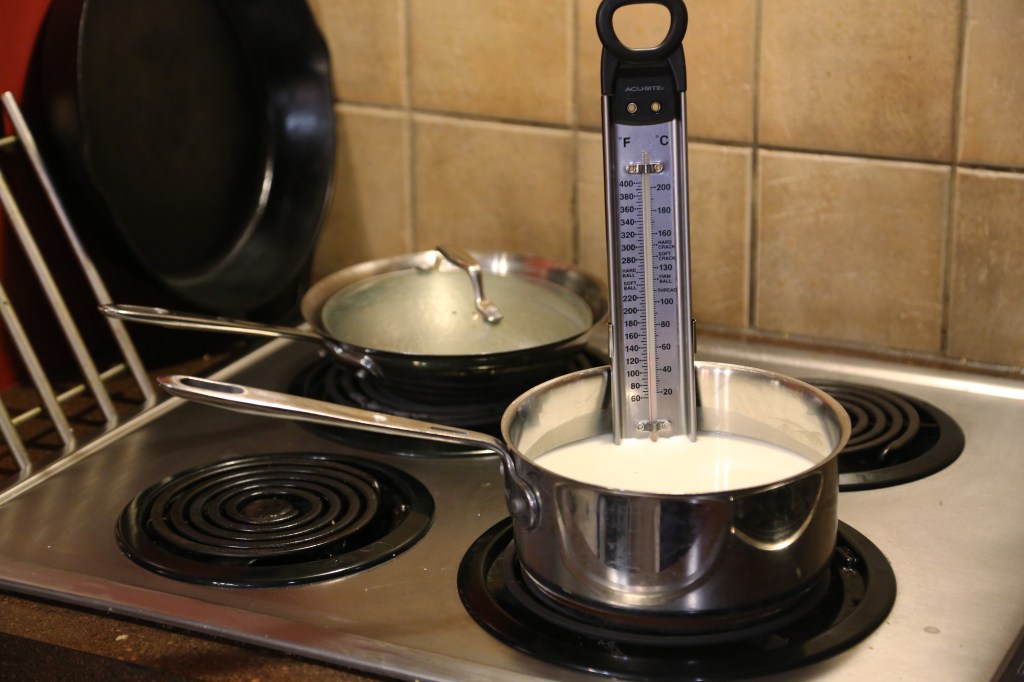
Fill a medium saucepan with goat’s milk.  Heat gradually until it reaches 180F.  Watch closely.  It shouldn’t take more than 15 minutes.  A candy thermometer works nice in this situation, but I used a probe meat thermometer the second time because it was more accurate (pictured here was my first attempt.)
cooking goat milk

Once it hits the magical temperature, remove from heat and stir in lemon juice. Let stand until milk starts to curdle, about 20 seconds. Don’t expect curdles, like cottage cheese curdles. Slight clumping will occur, but nothing too drastic. You can add a few extra droplets if nothing is actually happening.

Line a colander with a thin, flour sack kitchen towel.  Or lots and lots of layers of cheese cloth that you probably don’t have on hand.  Most of you have a thin kitchen towel that you can almost see through. As long as there aren’t holes, use it.  It’s efficient, it works great and just remember to wash it quickly and don’t throw it in the used-towel bin for a week all wadded up in a sweaty goat cheese smelling ball.  Like I did.

Set your lined colander over a deep bowl and ladle in the milk.  It will seem like it’s all seeping through, but don’t fret. Tie up the ends of the towel and suspend over the bowl and let it drain for about 2 hours.
straining goats milk

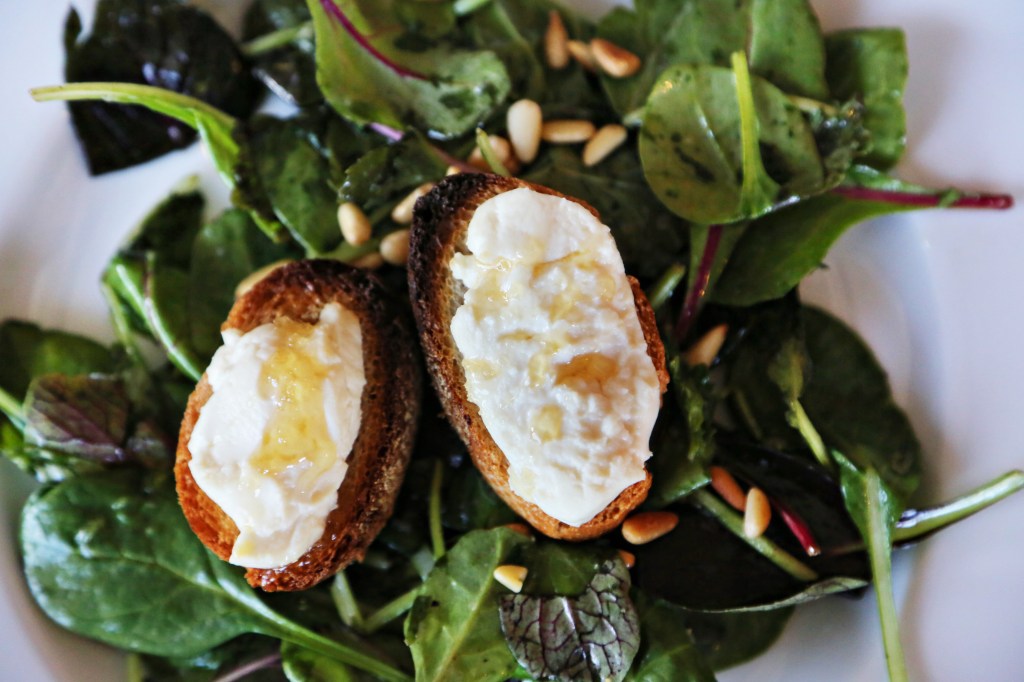
Transfer the cheese to a bowl and mix in seasonings to taste.  The first time I did it, I added the grated garlic, salt and about a teaspoon of herbs de Provence.  The second time, I roasted my garlic and added in olive oil.  SO GOOD. This time, I left out the garlic and stirred in some raw honey and a little salt and used it in a salad recipe from the Bonne Femme cookbook.  Amazing results.  Have fun with it!

After you mix in your flavors, if you want to be able to cut it or have some sort of shape, wrap it up in plastic wrap and leave in the fridge for a couple hours to let it firm up.  (see below) then you can cut it for bread or whatever you like.

goat cheese with baguette and raw honey


With just bread and extra honey it’s basically a dessert!

goat cheese honey salad


On top of baguette slices, broiled and then drizzled with extra honey.  Set on top of a mixed greens salad with toasted pine nuts and a sherry vinaigrette.  An excellent lunch!

The Creme Brulee of Lemon Bars

7G9A1687

I’ve stuck to this recipe for a few years now.  I love lemon desserts and my only complaint is that something claiming to be a lemon dessert isn’t ever lemony enough.  I want a ZINGER of a lemon shock.  I know this may cause several of you to stop reading, but given the choice between a GOOD lemon bar and a brownie, I’d choose the lemon bar.  Not every time.  Like I said, it’d have to be good.  Not too eggy, just enough curd, just enough crust, big time lemon flavor and another thing: don’t dust your lemon bars with confectioners’ sugar.  I’ll give you a few reasons:

1. Lemon bars usually have at least two cups of sugar.  So..there’s enough sugar.  Why would you dust something with more sugar that is already shockingly sweet? (I’m not complaining – lemon and sugar need each other)

2. I don’t like inhaling powdered sugar with each bite.  It kind of ruins the whole eating experience to have to hack on powder.

So that’s really only two reasons.  With the right recipe, you don’t need a dusting of sugar to cover up the weird, sometimes sticky top of a lemon bar.  This recipe is so wonderful because the top gets crunchy like a creme brulee.  I’m not sure why.  Maybe because I mix up the filling while the crust is baking, so by the time the crust is ready for the filling, the filling has sat and separated a bit.  I whip it up really good, too, so maybe it’s the airy texture?  Or maybe the key is to let them cool completely before cutting and don’t cover them up if you’re not serving them right away, lest the top get soft.  That way you get that good crunch on the top, the velvety curd in the middle and the buttery crumble of the crust all together.  This is adapted from Paula Deen’s recipe, and to me, it’s the perfect lemon bar recipe.  The only one you need.

Creme Brulee Lemon Bars

Crust
2 cups all-purpose flour
1 cup confectioners’ sugar, plus more for dusting
2 tbs lemon zest (just zest the lemons you will use for the filling)
pinch of salt
2 sticks butter, at room temperature, plus more for greasing

Filling
4 eggs
2 cups granulated sugar
6 tablespoons all-purpose flour
6 tablespoons fresh lemon juice

Preheat the oven to 350F.  Grease a 9x13x2″ pan.  Cover the bottom in parchment paper and let it hang off the sides (just along the long edge) so that you can remove it for cutting better.)
Make the crust by combining flour, confectioners’ sugar, zest and salt in a large bowl.  Cut in the butter to make a crumbly mixture.  Press the mixture into the prepared pan.  You may need to dip your fingers into a little flour or confectioners’ sugar to keep the dough from sticking to your fingers.  Bake for 15-20 minutes.

Meanwhile, to make the filling, mix the eggs, granulated sugar, flour, and lemon juice.  Pour this over the baked crust and bake for 25 minutes longer.  Don’t sprinkle with confectioners’ sugar. Run a knife around the edges to loosen the bars, and then carefully, by the parchment overhang, lift the entire pan of bars out of the pan and transfer to a cutting board to cut.  I like to cut off the very edge of the bars so that each one will be perfectly smooth, cut, squared edges (obsessive) but that’s really up to you.  No one said you couldn’t eat the trimmings and no one would have to know they ever existed.

The Battle of the Quiches

Quiche

My friend, Summer, hates quiche.  The very word gives her mock dry heaves.  We’ve all had a traumatic experience with some kind of food; whether it be an ingredient (dill for me, pomegranate juice for Matt) or an entire meal ruined by getting sick later in the evening, it’s hard to come back to good terms with the food after the trauma.  I’m not sure why Summer hates quiche, but according to her, the description she gives is of a “rubbery filling, soggy crust, gross texture” and what comes to mind, for me, is the mini-quiches you find at baby showers the world over, or the frozen pie-sized quiches that could double as semi-wet Frisbees.  Either way, it’s not a huge shock that a lot of people have a bad connotation when they hear the word.

Thomas Keller is here to save the day, once again.

He sees the problem with the American version/view of quiche, as well:

“Why didn’t the French quiche ever really translate to America? American culinary culture embraced it, then trashed it without ever knowing what it was…I think it was a mechanical problem, not having the right tool–a ring mold about two inches high.  When the modern quiche took off here in the 1970s, that wasn’t widely available.  Instead, a pie pan was commonly substituted for the two-inch ring mold.  And then came the premade pie shell.  Who would want to eat quiche made in that? A quiche has to have a specific thickness or you cannot cook it properly: It must be two inches high, in a crust thick enough to remain crisp, and not become soggy, during cooking.  Custard in a pie shell invariably overcooks (if you cooked it slowly enough, the crust would become soggy).” — Thomas Keller, Bouchon Cookbook, page 86

We’ve made Keller’s quiche several times.  The foundation is a good crust and so we go back to the crust I will rely on for the rest of my life – the same crust used in my strawberry pie a few posts ago.  It’s perfect, it flakes, it is sturdy without being tough, and it tastes like butter because that’s the only fat used.  Why look elsewhere?  The key is to completely bake the crust first, with plenty of overhang so that it doesn’t shrink while baking.  And I’m sorry you’ll have to buy a special tool to make it, but a 2 inch ring mold is necessary.  Not expensive and if you want to really make this recipe correctly, you need one.

We decided for this post, that we’d compare a store-bought quiche with Keller’s quiche.  I didn’t buy the most disgusting one I could find, either.  I actually bought probably the best a grocery store has to offer.  An in-house made quiche Florentine (bacon/cheese) baked in a pre-made pie shell (assuming.)  It was set in a metal pie tin with holes poked all in the bottom.  I appreciated that effort, because at least someone is acknowledging that quiche shells go soggy.  Didn’t quite work, though.  Here they are, back to back:

Battle of the Quiches

Store bought on the left, Keller on the right.
You can’t tell much, texture-wise, so I’ll tell you.  And again, I’m fairly impressed with the grocery store made quiche.  It’s about as good as a pre-made, American pie version gets.  However, the crust was really wet and soggy on the bottom. Couldn’t exactly pick it up without it sagging, whereas the Keller quiche’s crust is very crispy and fully cooked on the bottom (you can tell by the color and how it even stands away from the plate a bit.)  The Keller quiche has almost a half inch more custard and the store bought quiche’s crust tasted like sand.  Honestly.  Sand held together by water.  It really wasn’t good.  Now, the store-bought quiche’s filling was fine, taste-wise.  It had bacon – how can that not be at least decent?  (I could imagine a frozen mini-version would find a way) but anyway, it was a good effort, but the crust was awful and it was wet, just like you don’t want it to be.  It also had that over cooked texture – kind of rubbery- that eggs get if cooked too long.  I swear to you, I am not making this up, after a few days and microwaving the leftover Keller quiche, it STILL had a smooth, silky, custard-like texture.  Almost creme brulee texture.  It’s so darn good.

Fun experiment and I would say that if you’re interested in doing something for the sake of the experiment and doing things properly, buy yourself a ring mold and get after it.  And remember – a Keller quiche takes two days.  So if this is for Sunday brunch, start it on Saturday afternoon.
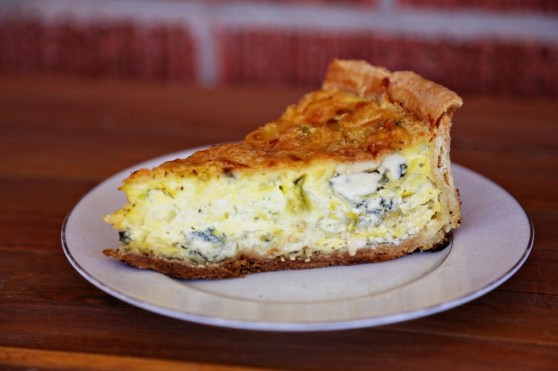
Roquefort and Leek Quiche

I also want to add, for the sake of The Family Meal, that Olive ate on both quiches with  much enthusiasm.  Yes, even those big chunks of Roquefort.  She leaned forward and said, “mmmmm!” to both.  Eggs are awesome.  Oh, and she also said, “Quiche” perfectly.  I think because “quiche” sounds like her version of the word “cheese”.  Whatever works, Ollie.

For the crust:

2 cups AP flour, plus extra for rolling out
1 tsp kosher salt
8 ounces chilled, unsalted butter, cut into 1/4″ pieces
1/4 cup ice water

Place 1 cup of the flour and the salt in the bowl of a heavy-duty mixer fitted with a paddle attachment.  Turn the mixer to low and add the butter a small handful at a time.  When all the butter has been added, increase the speed to medium and mix until the butter is completely blended with the flour.  Reduce the speed, add the remaining flour, and mix just to combine.  Add the water and mix until incorporated.  The dough will come around the paddle and should feel smooth, not sticky, to the touch.
Remove the dough from the mixer and check to be certain that there are no visible pieces of butter remaining.  Pat the dough into a 7-8″ disk and wrap in plastic wrap.  Refrigerate for at least 1 hour, up to a day.

Lightly brush the inside of a 9×2″ ring mold with canola oil (or cooking spray works) and place it on a parchment-lined baking sheet.
Place the dough on a floured work space and rub all sides with flour.  Roll out the dough into about a 14″ diameter circle.  Lift the dough into the ring, centering it carefully and pressing it gently against the sides and bottom edges of the ring.  Trim any dough that extends more than an inch outside the ring.  Carefully check for crack in your dough and patch any cracks with your trimmed dough (I DIDN’T DO THIS AND OUR QUICHE LEAKED ALL OVER THE PLACE)
Refrigerate your dough for 10 minutes to resolidify your butter (if you don’t do this, the butter will drain out of your dough as it bakes.  Done it; learn from my mistakes)
Line the bottom of your crust with parchment and fill with pie weights (our pie weights are dry beans – a whole pound of them.  We just keep them for use in pies).  Bake shell in a preheated 375F oven for 35-45 minutes, or until the edges of the dough are lightly browned.  Carefully remove the parchment and the weights.  Check the dough for cracks and patch with reserved dough trimmings (DO THIS STEP) Return the shell to the oven for another 15-20 minutes, or until the bottom is rich golden brown.  Remove from oven and let the shell cool completely on the baking sheet.

Basic Quiche Batter

2 cups milk
2 cups heavy cream
6 large eggs
1 tbs kosher salt
1/4 tsp ground pepper
A few gratings of fresh nutmeg, or 1/8 tsp of ground nutmeg

Combine the milk and cream in a large saucepan over medium heat and heat until a skin begins to form on the surface of the milk.  Remove from the heat and let cool for 15 minutes before continuing.  If you have an immersion blender, add the rest of your ingredients to the saucepan and blend for about a minute to fully aerate the batter and make it light and foamy.  Pour the batter into your quiche shell (which is still on your lined, rimmed baking sheet – this thing inevitably will leak a tish.)
At this point, if you’d like to add ingredients, go for it.  Be creative.  We did his blue cheese and leek version and it was awesome.  You simply add these ingredients (about a cup of each ingredient, chopped fine and cooked properly) to the quiche batter as you’re pouring it into the shell.  Try crumbled, cooked bacon and cheddar cheese, or caramelized onion and grated swiss.  The options are endless.
Bake for 1 1/2 to 1 3/4 hours, or until the top of the quiche is browned and the custard is set when the pan is jiggled.  Remove and let cool to room temp on a cooling rack.  Refrigerate until chilled, at least one day, up to 3 days.  Once the quiche is thoroughly chilled, scrape away the excess crust from the top edge of the quiche.  Set the quiche down and carefully lift off the ring.  Preheat the oven to 375F.  Line a baking sheet with parchment.  Using a serrated knife, carefully cut the quiche into 8 pieces.  Place the pieces on a baking sheet and reheat for 15 minutes, or until hot throughout.  Serve immediately.

Quiche shell

Corned Beef – this is your Monday post

open faced corned beef sandwich

I once saw a segment on the Martha Stewart show where she had a guest on and they were making pastrami sandwiches.  In her typical, incredulous, Martha-tone, she said, “Doesn’t everyone corn their own beef?!”  I balked.  I would have asked, “Does anyone make their own corned beef?!”  Making my own corned beef seemed not only like a giant waste of time, but I don’t even crave the stuff, so why would I want to let a gigantic stock pot filled with a brisket sit in my fridge for a week when I could go buy a nice, pre-packaged Hormel version for $4?

Because I’m married to Matt Palmer.  He is extraordinary.  He always sees the potential in a long process.  He has endless patience.  He can set out with the process in mind, not the finished product.  He enjoys learning how to do something from scratch, whether it be something widely appealing like home cured bacon, or as unappealing and death-smelling as pickled diakon, which sat on top of my computer for a week, fermenting (but hey, it made an interesting dip!)  The point, for him, is always the learning process.  I have learned so much in the last 9 years of knowing him and 8 years living with him.  He’s never once lost his patience and thrown something against the sink to watch it explode because it didn’t work out right (ahem), and even spent one Sunday afternoon making homemade mayonnaise 5 times in a row for 2 hours because the emulsion kept breaking (I remember crying that day.)  Needless to say, he’s greatly influenced where I am now and how cooking has become therapeutic for me.  He is the reason I keep trying to do things better, for better’s sake.

So when he got me involved in his latest corned beef endeavor, I was less reluctant.  He got it in the brine, and I finished it on the stove a week later when it was ready.  It makes a TON, so I will be slicing it and freezing it really soon.  But the other day, I sliced some thin strips, heated them up in a skillet (unnecessary, because it’s cooked, but appealing because it sizzles) and made a corned beef sandwich on rye with store-bought sauerkraut that was fermented in someone ELSE’S place of business instead of my garage, thankyouverymuch.

The results were good.  I’ve taken the corned beef recipe directly from Michael Ruhlman’s blog, because that’s who we look to when it comes to charcuterie recipes and we didn’t deviate from the recipe a bit.  For the sandwich, I just toasted some rye bread, spread mayo and dijon mustard on each side, topped it with sliced cornichons and sauerkraut and melted some swiss cheese on top of the beef.

corned beef sandwich

Home-Cured Corned Beef

1-1/2 cups kosher salt*
½ cup sugar
4 teaspoons pink salt (sodium nitrite), optional
3 cloves garlic, minced
4 tablespoons pickling spice
1 5-pound beef brisket
1 carrot, peeled and roughly chopped
1 medium onion, peeled and cut in two
1 celery stalk, roughly chopped.

In pot large enough to hold brisket, combine 1 gallon of water with kosher salt, sugar, sodium nitrite (if using), garlic and 2 tablespoons pickling spice. Bring to a simmer, stirring until salt and sugar are dissolved. Remove from heat and let cool to room temperature, then refrigerate until chilled.

Place brisket in brine, weighted with a plate to keep it submerged; cover. Refrigerate for 5 days.

Remove brisket from brine and rinse thoroughly. Place in a pot just large enough to hold it. Cover with water and add remaining pickling spice, carrot, onion and celery. Bring to a boil over high heat, reduce heat to low and cover. Simmer gently until brisket is fork-tender, about 3 hours, adding water if needed to cover brisket.

Keep warm until ready to serve. Meat can be refrigerated for several days in cooking liquid. Reheat in the liquid or serve chilled. Slice thinly and serve on a sandwich or with additional vegetables simmered until tender in the cooking liquid.

*A note about the saltSalt level not hugely critical here because it’s basically boiled and excess salt moves into cooking liquid.  You can weigh out 12 ounces here if you feel better using a scale (approximately a 10% brine).  Or you can simply make a 5% brine of however much water you need to cover (6.4 ounces per gallon).  When you cook it, season the cooking liquid to the level you want your meat seasoned.  Another option is wrapping the brisket in foil and cooking it in a 225 degree oven till tender, but only do this if you’ve used the 5% brine.

Yield: 8 to 10 servings.

Pickling Spice

2 tablespoons black peppercorns
2 tablespoons mustard seeds
2 tablespoons coriander seeds
2 tablespoons hot red pepper flakes
2 tablespoons allspice berries
1 tablespoon ground mace
2 small cinnamon sticks, crushed or broken into pieces
2 to 4 bay leaves, crumbled
2 tablespoons whole cloves
1 tablespoon ground ginger.

Combine peppercorns, mustard seeds and coriander seeds in a small dry pan. Place over medium heat and stir until fragrant, being careful not to burn them; keep lid handy in case seeds pop. Crack peppercorns and seeds in mortar and pestle or with the side of a knife on cutting board.

Combine with other spices, mix. Store in tightly sealed plastic or glass container.

Manna

manna

I read a few chapters out of Exodus this morning in my “Eat This Book” Bible reading plan, and I found it interesting the description of manna that fell from the sky during the Israelite’s time wandering in the desert.  I don’t think I’d ever really remembered this description:

“31 The house of Israel called the bread manna; it was like coriander seed, white, and it tasted like wafers made with honey.” – Exodus 16:31

So I thought, “I am going to make that this afternoon.  It listed my ingredients for me”  So I did.  Looked up a basic recipe for an unleavened cracker, and improvised the rest.  The results were pretty good and my first thought was, “This would be great with some goat cheese” (future blog post) but I wouldn’t recommend eating only this for the next 40 years…

Manna
makes enough for at least 10 desert wanderers

2 cups flour (white, wheat or a mix – I used AP white)
1 cup water
1 tbs coriander seeds, crushed fine
1 tbs raw honey
pinch of salt

Combine the flour, pinch of salt and coriander seeds in a bowl until well incorporated.  Stir in the water and honey (I microwaved the honey for ease in pouring) and mix with a fork until fully combined and knead it a few times to form a ball.  Divide the ball into 8 smaller sections.  Roll out each little ball on a floured surface until really really really thin.  Place the strips side by side (they can touch – they don’t spread) and bake at 475F for about 10-12 minutes until browned on top.  While still warm, drizzle more honey on top and place back in the oven until bubbling.  Remove, let cool completely, break apart and eat.